

Electric Service Policies
Rules and standards for connecting and maintaining BPU electric service.
Home > About BPU > Policies > Electric Service Policies
Browse the Policy
Click any section to read the details.
Electric Policies Definitions
Electric Policies Definitions
The following terms shall have the following meanings when used in the Electric Policies, unless otherwise stated:
- Appurtenances and Structures
Include any buildings, towers, transformers, capacitors, conduit, concrete pads, lines, cables, metal trusses, or any other constructed object.
- Area Electric Power System or Area EPS
An AREA EPS is any Electrical Power System (EPS) that serves local EPSs. An Area EPS has primary access to public rights of way, priority crossing of property boundaries, etc., and is subject to regulatory oversight. For purposes of this Policy, the Area EPS is the KCBPU Service Area.
- Area Electric Power System Operator or Area EPS Operator
The Area EPS Operator is the entity or organization responsible for designing, building, operating, and maintaining said Systems; more particularly, for purposes of this Policy the Area EPS Operator is KCBPU.
- Basic Electric Service Extensions
Electric service extensions of up to 100 foot of single phase primary or secondary distribution lines from the Board’s existing circuit.
- Characteristic Harmonics (h)
Those harmonics caused by semiconductor converter equipment in the course of normal operation. They are defined by the mathematical equation of:
h = (k)(q) ± 1
where k is equal to any integer number and q is the number of pulses (or lobes) in the rectifier’s DC output per cycle of input voltage. - Clearance
The establishment of temporary barriers, temporary de-energization and grounding of conductors, temporary rerouting of electric current, or temporary relocating of conductors.
- Customer’s Installation
The service entrance, switches and equipment installed on the customer’s premises and on the customer’s side of the point of delivery for the reception of and the control of electric energy.
- Customer Service Extension
Any electric service infrastructure additions or modifications and implementation thereof as necessary for delivery of electric power between the public right-of-way and the Point of Delivery.
- CT or Current Transformer
A type of instrument transformer that scales down the line current to safe levels for metering.
- Demand
The maximum rate of delivery of electric energy measured in kilowatts (kW) registered over any thirty (30) minute period.
- Distortion
Any corruption of a pure 60 Hz sinusoidal voltage or current waveform.
- Distributed Energy Resource or DER
Customer-owned equipment that produces electricity and can be operated in parallel with the Area EPS; this includes storage systems when they are discharging energy. The following are not considered DERs: load curtailment (a.k.a., demand response), standby generators isolated by a transfer switch, and transmission facilities covered under a Generator Interconnection Agreement.
- Distributed Generation Customer or DG Customer
A customer that owns and, with KCBPU approval via mutually executed contract, operates a DG Facility. Before a contract is issued (e.g., during design and construction), the DG Customer must obtain from KCBPU an approved application. This was formerly known in KCBPU documents as a Parallel Generation Service (PGS) Customer. DG Customers are categorized as small, medium or large based on their DG Facility ratings.
- Distributed Generation Facility or DG Facility
A Customer-owned, KCPBU-approved installation for interconnecting DERs with the Area EPS. This was formerly known in KCBPU documents as a Parallel Generation Service (PGS) Facility.
- Small DG Facility: A DG Facility rated to generate less than 20 kVA single phase, or 170 kVA three phase, at the rated voltage at the Point of Common Coupling.
- Medium DG Facility: A DG Facility rated to generate greater than or equal to 70 kVA three phase but less than 4,000 kVA three phase, at the rated voltage at the Point of Common Coupling.
- Large DG Facility: A DG Facility rated to generate greater than or equal to 4,000 kVA three phase at the rated voltage at the Point of Common Coupling.
- Electric Power System or EPS
The total Distribution and Transmission Electric System to which customers are interconnected for purposes of receiving electrical energy and power. An EPS may include facilities that deliver electric power to a load.
- Electric Service
The conductors and equipment for delivering energy and power supplied by KCBPU at a point of delivery on the customer’s premises at a frequency of approximately 60 cycles and voltage designated by KCBPU.
- Electric Service Extensions
Any electric service infrastructure additions, modifications, improvements, demolition work, and implementation thereof including but not limited to overhead conductors, poles, pole top framing units, transformers, wires, supports, guys and anchors, overload and short circuit protection, or the underground equivalents thereof such as underground overload and short circuit protection, relays, conduits, duct banks, trenches, manholes, vaults, pull boxes, medium and high voltage circuit breakers, substation bus work, switchgear, buses, disconnect switches, and other infrastructure components commonly associated with electric distribution, sub-transmission, and transmission systems used by KCBPU.
- Electric Service Standards or ESS
The latest version of KCBPU’s Electric Service Standards which are issued as a supplemental resource to the UG’s codes/regulations and are meant to assist the customer in the planning of electrical installations.
- Energy
Electric energy measured in kilowatt-hours (kWh) and kilovolt-amperes reactive-hours (kVARh).
- Energy Rate Component or ERC
KCBPU’s cost of purchased and generated electricity in the Rate Application Manual under the Energy Rate Component Rider E-1, or any successor thereto.
- Flicker
The impression of unsteadiness of visual sensation induced by a light stimulus whose luminance or spectral distribution fluctuates with time.
- Harmonic
A sinusoidal voltage or current having frequencies that are integer multiples of the power frequency.
- Instrument Transformer
An electrical device that is used to isolate or transform voltage or current levels to safe levels for metering.
- Interconnection
The physical connection of a Customer’s Electric Service to KCBPU’s Electric Distribution or Transmission System, at a point known as the Point of Common Coupling (PCC), in order to receive Electric Service or to operate DG Facilities in parallel with KCBPU’s Electric Transmission or Distribution System.
- Interconnection Agreement
A legal instrument executed by and between KCBPU and a Customer defining the terms, limitations and restrictions, costs, conditions, and any other pertinent requirements which may be agreed to by the parties thereto under which the Customer may connect to KCBPU’s Electric Distribution or Transmission System at the Point of Common Coupling (PCC).
- Island
A condition in which a portion of an Area EPS is energized solely by one or more Local EPSs through the associated PCCs while that portion of the Area EPS is electrically separated from the remainder of the Area EPS.
- Intentional Island: A planned Island.
- Unintentional Island: An unplanned Island resulting from an abnormal condition, equipment failure, or other unforeseen circumstances.
- Kilowatt (kW)
An electrical unit measuring real power, corresponding to 1,000 watts. Its arithmetic sign (i.e. positive or negative) indicates the direction of power flow, and it serves as the basis for metering calculations in most DG Facilities. Within engineering and equipment specifications, this unit represents only a portion of the total or apparent power and must be specified with a power factor.
- Kilowatt-Hour or kWh
An electrical unit measuring energy, corresponding to 1,000 Watts for 60 minutes, that is used in metering calculations.
- Kilovolt-Amperes Reactive-Hour or kVARh
An electrical unit measuring energy, corresponding to 1,000 VAR for 60 minutes, that is used in metering calculations.
- KiloVolt-Amperes or kVA
An electrical unit measuring total or apparent power, including inductance and capacitance of the circuit, used primarily in engineering and equipment ratings for most DG Facilities. It corresponds to 1,000 VoltAmperes, and its arithmetic sign (i.e. positive or negative) indicates the direction of power flow. When multiplied by the power factor, it can be used to derive the real power in kilowatts.
- Large Electric Service Extensions
Electric service extensions with an estimated coincident demand of over 3,750 kVA.
- Local Electric Power System or Local EPS
Any EPS contained entirely within a single premise or group of premises; for purposes of this Policy, these premises are on the customer side of a KCBPU meter.
- Low Voltage
In any single or three phase distribution system, low voltage is any root-meansquare (RMS) voltage of 600 VAC or less.
- Meter Base
A UL-approved metal box, containing a socket into which KCBPU’s electric meter can be inserted, terminals for service and load wires, wall mounts to be lag screwed into the building outer wall, and knockouts for conduit entry.
- Meter Installation
The meter and devices installed by KCBPU to measure the electric energy supplied to the customer at the point of delivery.
- NEC
The National Electric Code, published by the National Fire Protection Association (NFPA). This standard applies to customer installations.
- NESC
The National Electric Safety Code, published by the Institute of Electrical and Electronics Engineers (IEEE). This standard applies to utility installations.
- Net Energy
The electrical energy exported by the DG Facility to the Area EPS subtracted from the electrical energy delivered by the Area EPS to the DG facility.
- Net Metering
KCBPU’s equipment and process for measuring the net energy between the Area EPS and the DG Facility. KCBPU credits the DG Customer for each kilowatt-hour its DG Facility delivers to the Area EPS, using energy rate(s) set forth in this Policy.
- Overhead Electric Service Extension or Overhead Line Extensions
Electric service extensions installed above ground.
- Overhead Line
Per the Overhead Power Line Accident Prevention Act means, all electrical conductors installed above ground.
- Point of Common Coupling or PCC
The point on the customer’s premises or other mutually agreed point, where KCBPU terminates its service conductors or equipment with connection to the customer’s service conductor or equipment. This is the demarcation between KCBPU’s distribution system and the Customer’s Installation. In some standards and applications, this is also known as the Service Point or Point of Delivery.
- Point of Delivery
The point on the customer’s premises or other mutually agreed point, where KCBPU terminates its service conductors or equipment with connection to the customer’s service conductor or equipment. This is the demarcation between KCBPU’s distribution system and the Customer’s Installation. In some standards and applications, this is also known as the Service Point or Point of Common Coupling (PCC).
- Power Factor
An electrical unit representing the ratio of inductance or capacitance in an electric circuit. It ranges from 0.01 lagging (inductive) to 1.0 (unity) to 0.01 leading (capacitive). Power transfer is most efficient at unity power factor, so KCBPU Policy PE-310-001 Section 14.00 requires Customers to maintain power factor within a specified range at their Service Point.
- Power Frequency
The frequency that KCBPU’s electric system is designed to operate at 60 Hertz (60Hz).
- PT or Potential Transformer
An instrument transformer that scales down line voltage to safe levels for metering. (Also known as VT or Voltage Transformer)
- Redundant Service
An additional service that is installed as a back-up service and is supplied from a different KCBPU circuit than the customer’s first service.
- Renewable
Electrical energy produced from solar-photovoltaic technologies, wind turbines, certain fuel cells, geothermal forces, wave or tidal action, and methane gas from landfills or sustainable biomass. Solar and wind are the most common for DG installations; KCBPU will evaluate other sources on a case-by-case basis.
- Resonance
A condition in which the natural frequencies of an electric power system are excited and sustained by an electrical disturbance. This can result in excessive voltages and currents.
- Root Mean Square (RMS)
A calculation commonly used on AC voltage and current waveforms, also known as the quadratic mean. It is equal to the square root of the time average of the squares of the AC magnitudes. RMS produces the same resistive heating as DC current or voltage of the same magnitude.
- Sag
A decrease to between 10% and 90% of RMS voltage or current at the power frequency for durations of 0.5 cycles to 1 minute. Also known as a dip or under voltage.
- Short Circuit Contribution
The relative proportion of short circuit current available at the PCC as compared to the total available short circuit current at the PCC, expressed as a percentage. These figures are furnished by the DG Customer as supported by certified data, and by KCBPU Electrical Engineering, respectively. They may be three-phase, line-to-ground, or double line-to-ground faults, as required.
- Short Circuit Ratio or SCR
The short circuit current available at the PCC divided by the total load current at the fundamental power frequency. (ISC / IL)
- Small Electric Service Extensions
Any electric service extensions of small scale and scope (i.e., 3,750 kVA or less), but which are larger in scale or scope than a Basic Electric Service Extension.
- System Capacity
System Capacity is defined as the sum of all available native generation sources on the KCBPU system, less committed capacity obligations. KCBPU is committed to obligate any available System Capacity to its own retail customers first, followed by capacity or energy sales to other surrounding utilities with which it has agreements, and then the area market served by its Regional Transmission Organization (RTO), the Southwest Power Pool (SPP). If System Capacity is not sufficient to meet all these requirements at any time, then KCBPU can and will make purchases as needed at most efficient rates available.
- Swell
An increase to between 110% and 180% of RMS voltage or current at the power frequency for durations from 0.5 cycles to 1 minute. Also known as overvoltage.
- Total Harmonic Distortion or THD
The ratio of the sum of the squares (RSS) of the RMS values of non-fundamental harmonics to the RMS value of the fundamental (first harmonic) quantity being measured. This ratio can apply to a voltage, current, or power energy waveform.
- Total Demand Distortion
For any given current waveform, this is the ratio of the sum of the squares (RSS) of the RMS values for non-fundamental harmonics to the RMS value of the average of demand current peaks during the preceding 12 months. The sum of the squares (RSS) of the RMS values of higher harmonic currents is also measured at the time of each monthly peak demand current. This requires special waveform analyzer equipment to obtain and record such values, and is used as an average measure of demand distortion over a year’s period.
- Underground Distribution Extensions
Underground electric service extensions installed in the right-of-way.
- Voltage Line
As defined in the Overhead Power Line Accident Prevention Act K.S.A. 1993 66-1709 through 66-1716.
Preface
Purpose:
To provide a detailed guide for conduct of actions and indicating the responsibility and requirements of both the Kansas City Board of Public Utilities, (KCBPU), and the Customer with regard to application for service, delivery and use of services and general service policies.
Intent:
To provide for all Customers of the KCBPU efficient, safe and reliable service and uniform, consistent and equitable consideration.
Scope:
To provide for all Customers of the KCBPU efficient, safe and reliable service and uniform, consistent and equitable consideration.
Conflict
Conflict:
In case of conflict between any provisions of an approved rate schedule or a special contract and these policies, the provisions of the approved rate schedule or special contract shall apply.
Severability:
These policies are severable and if any one of these said policies are considered invalid it shall not in any way affect the validity of any of the other several policies.
Service agreements and applications
In the case of a Customer “turn off” and a new Customer “turn on,” on approximately the same date at the same meter, a single reading obtained by an employee may be sufficient. In the event there is no access to the meter, the service may be discontinued until the new Customer makes arrangements for a meter reading.
Estimated Costs:
In the case of a Customer “turn off” and a new Customer “turn on,” on approximately the same date at the same meter, a single reading obtained by an employee may be sufficient. In the event there is no access to the meter, the service may be discontinued until the new Customer makes arrangements for a meter reading.
PowerService Contract:
The General Manager shall establish a Power Service Contract for all Customers requiring non-standard service. The Power Service Contract shall provide provisions for penalty payment, grace period before penalty is applied, and the period for penalty payment. The rates will not be established in this agreement, and will follow the standard rate schedule.
Supplying electric service
Delivery Phase and Voltage:
All new electric service will be supplied in the form of 60 hertz alternating current at the following nominal secondary voltages
- 120/240volt, single phase, 3 wire
- 120/208 volt, 3 phase, 4 wire, Wye
- 277/480 volt, 3 phase,4 wire, Wy
Note: Existing three wire, three phase service will be supported in most cases. Upgrades of existing three wire, three phase services will be reviewed and approved by KCBPU’s Electrical Engineering Department, based on type of facility expansion.
Service may be delivered at primary distribution voltages of:
- 7200/12470Y volt, 4 wire, 3 phase
- 7960/13800Y volt, 4 wire, 3 phase
Note: The above primary distribution voltages apply only when the size and characteristics of the Customer’s load justifies primary delivery.
All electric service will be supplied as required by the Customer subject to the following:
- Voltage supplied will be designated by KCBPU.
- Single phase service will not be supplied when the Customer’s projected demand exceeds 150kW.
- Threephase service will not be supplied to a Customer whose motor or appliance loads are less than 7-1/2 horsepower, except where three phase secondary facilities are already in place at the applicant’s service location, or unless the applicant pays in advance to KCBPU an amount equal to the actual cost for a new three phase facility, exclusive use of meter and service drop, or such part of the actual installation cost as KCBPU may consider equitable.
Customer to Furnish Right-Of-Way:
When equipment and material necessary to supply electric service is to be installed, operated and maintained in or on property owned or controlled by the Customer, the Customer will be required to provide or procure for KCBPU such rights-of-way that are satisfactory to KCBPU
Right of Access:
KCBPU shall have the right of full and free access to the Customer’s premises for the purpose of constructing, maintaining, inspecting, repairing or removing any of KCBPU’s facilities, for necessary tree and shrub trimming or for any purpose related to the furnishing of electric service.
Upon termination of service and for a reasonable period thereafter, KCBPU shall have the right of full and free access to the Customer’s premises to remove its facilities installed thereon.
Interruption of Service:
All electric utility systems are susceptible to electrical disturbances, caused by many different factors beyond a utility’s control. However, KCBPU will exercise reasonable care to provide continuous electric service to the Customer, but does not guarantee the supply of electric service against interruptions. KCBPU shall not be liable for damages or be considered in default of its service agreement with the Customer for any failure or curtailment of electric service caused by the following
- Breakdown or damage to facilities
- An act of God or public enemy
- Accident strikes or their equivalent
- Legalprocesses
- Governmental interference
- Delivery delays
- Any cause beyond the control of KCBPU
The Customer is responsible for protecting their own facilities and equipment from disturbances on KCBPU’s electric system.
KCBPU reserves the right to temporarily suspend its electric service to Customers for the purpose of inspecting, maintaining, repairing, or altering any of its electric facilities. KCBPU will make reasonable effort to keep such interruptions as short as possible. KCBPU also reserves the right of selective interruptions considered necessary to maintain or restore the integrity of KCBPU’s electric system.
Temporary Service:
KCBPU will furnish temporary electric service for construction purposes and to operations of a temporary nature if the Customer requests the temporary electric service and pays to KCBPU, in advance of installation, the appropriate fee defined in the Adopted Fee Schedules.
KCBPU reserves the right to refuse electric service, if such temporary service proves to be a hardship or hazard to KCBPU or its other Customers.
In addition, the Customer will pay the regular charge for electric service under the applicable rate schedule.
Non-Standard Service:
Where the Customer requires service at other than standard voltages or voltage regulation within closer limits than provided by KCBPU’s standard installations, KCBPU mayrequire the Customer to provide at the Customer’s own expense such special or additional equipment as may be necessary, or KCBPU may provide such equipment if the Customer pays in advance to KCBPU the estimated installed cost of such equipment.
RedundantService:
If the Customer has a critical operation and desires redundant service, KCBPU will provide redundant service subject to a monthly charge, as determined by KCBPU. The Customer shall pay KCBPU, in advance, the estimated installation costs of the redundant service.
Existing Service Modifications:
If a Customer requests to modify its existing service, KCBPU will, at the Customer’s expense, provide any necessary modifications to its existing distribution facilities. The Customer shall pay KCBPU, in advance, the cost of the necessary modifications, additions, or removals to KCBPU’s existing distribution facilities. KCBPU mayreduce the cost charged to the Customer if the modifications to the Customer’s service result in an increased electric load that justifies the cost reduction.
Changes to the Customer’s existing service that may require modifications to KCBPU’s existing distribution facilities include, but are not limited to: changing the service voltage, increasing the service load by at least 10%, relocating the Point of Delivery, relocating or replacing the Meter Installation, installing an additional service, removing the service, replacing an overhead service with an underground service, or similar situations.
Relocation of Poles or Equipmentat Customer Request:
If the Customer desires a pole or other structure moved for any reason, KCBPU will, if practicable from an engineering and operating standpoint, and provided that right of-way is available, relocate its pole or structure if the Customer pays to KCBPU, in advance, the estimated cost of changing the pole or structure location, as determined by KCBPU.
PowerFactor Adjustment:
Service supplies under KCBPU’s rate schedules to Customer with demand of over 70 kW shall be subject to the following power factor adjustment provisions:
- AllCustomers will be encouraged to maintain a power factor as indicated in Section 14.00, or the currently approved rate schedule or better. The power factor used may be determined by permanently installed instruments or by tests at reasonable intervals. The determined power factor shall remain in effect until a new determination is made.
- Thecharge for maintaining a power factor lower than specified in the effective rate schedule will be prescribed in KCBPU’s currently approved Large Power Rate and will be shown on the Customer’s regular monthly billing.
- Leading kVAR-hours will not be credited against lagging kVAR-hours and the reactive adjustment will be zero when the power factor is greater than specified in KCBPU’s currently approved rate schedule.
Discontinuance or Refusal of Service by KCBPU:
KCBPU maydisconnect or refuse to connect electric service for any of the following reasons:
- Violation of KCBPU’s policies or failure to comply with service agreement signed with KCBPU.
- Whenelectric service is ordered turned off by a governmental entity, the service shall be disconnected and shall not be reconnected until KCBPU receives governmental or court ordered approval to restore service.
- Whentheservice is determined to be unsafe, a disturbing use, or dangerous by KCBPU.
- Whenadiversion of service is found. The service shall be disconnected and the service shall not be reconnected until the Customer has arranged for a licensed electrician to correct the situation and has paid for all expenses billed by KCBPU, in accordance with Policy PA-100-002.
- Forfailure to comply with KCBPU’s request for entry of premises to read meters after ample notice.
KCBPU’s Property onCustomer’s Premises:
All meters, transformers, wires, poles and other equipment furnished and installed by KCBPU onthe Customer’s premises for the supply of electric service shall be and remain the property of KCBPU.All such material and equipment installed by KCBPU on the Customer’s premises shall be operated and maintained by KCBPU and may be replaced when necessary and may be removed from the Customer’s premises upon termination of the Customer’s service agreement or upon discontinuance of electric service to the Customer for any infraction of these policies
KCBPU’s Responsibility:
The obligation of KCBPU to supply electric service to the Customer shall be completed at the Customer’s point of delivery for the operation of all electrical equipment on the premises of the Customer. The responsibility of KCBPU for the quality of service and the operation of its facilities ends at the point of delivery. KCBPU shall be required only to furnish, install and maintain one (1) connection from its distribution facilities, service connectors from such connection to the Customer’s point of delivery, and one (1) meter installation to measure the electric service to the Customer
Cogeneration and Small Power Production Facilities:
KCBPU will consider accommodation of Customer’s cogeneration and small power production facilities provided such facilities are connected and operate in a manner satisfactory to KCBPU.
Customer’s service obligation
Customer’s Wiring and Equipment:
All wiring and equipment, (except meters), required for the control and reception of electric service delivered to the Customer beyond the point of delivery shall be furnished, installed, maintained by, and be the sole responsibility of the Customer. Prior to installation, it shall be the sole responsibility of the Customer to determine that the Customer’s wiring and equipment will be suitable for operation at the voltage, phase and other characteristics of the class of service that will be supplied by KCBPU at the Customer’s service location.
The Customer shall be responsible for providing at his own expense suitable protective equipment such as fuses, circuit breakers, protective systems and relays to adequately protect the Customer’s equipment against interruptions, lightning, phase failure, voltage variations and other irregularities in the electric service delivered by KCBPU.
The Customer’s wiring and equipment must meet all applicable requirements of the National Board of Fire Underwriters and comply with the applicable requirements of the National Electric Code, the National Electric Safety Code, the ordinances of the Unified Government and KCBPU’s policies.
KCBPU shall be advised and consulted prior to installation of increased loads such as air conditioning, electric, water, and space heating, etc., so that any required transformation or other changes can be made to adequately serve the additional load.
KCBPU will not be liable for any loss, damage or injury to persons or property in any manner connected with distribution or use of electric service by the Customer at or on the Customer’s side of the point of delivery.
Inspection:
In areas where city ordinances require permits and final inspection, KCBPU cannot set the meter or establish service until the Customer’s installation has passed inspection and KCBPU has been notified of approval by the inspecting authorities. In areas served by KCBPU, but outside the jurisdiction of the local inspecting authorities, KCBPU reserves the right, but assumes no responsibility to inspect the Customer’s installation. KCBPU will not be liable for any inspection or recommendation made as a courtesy to the Customer or as a safeguard to the electric service supplied by KCBPU to its other Customers.
Customer’s Responsibility for Protection of KCBPU’s Property
The Customer shall exercise proper care to protect the property of KCBPU which is installed on the Customer’s premises from being damaged or destroyed and shall permit no person other than employees or agents of KCBPU to inspect, work on or disturb any KCBPU owned wiring between the meter and the service conductors from KCBPU’s distribution system.
When property belonging to KCBPU has been damaged or destroyed due to carelessness, neglect or misuse by the Customer, a member of the Customer’s family or his agent or employee, the Customer shall pay KCBPU the cost of necessary repair or replacement of such facilities. It shall be the duty of the Customer to notify KCBPU of any damage or dangerous conditions which may exist.
Unauthorized Attachments:
When property belonging to KCBPU has been damaged or destroyed due to carelessness, neglect or misuse by the Customer, a member of the Customer’s family or his agent or employee, the Customer shall pay KCBPU the cost of necessary repair or replacement of such facilities. It shall be the duty of the Customer to notify KCBPU of any damage or dangerous conditions which may exist.
Phase Balance:
The contractors or other persons installing the Customer’s wiring and electrical equipment are to balance the load current as nearly as practicable between the two sides of a single phase service or the phase wires of a three wire or four wire three phase service. In no case shall the current imbalance exceed 33-1/3 percent of the phase current which would be required at maximum load under balanced current conditions.
LowPowerFactor Devices:
Customers shall ensure that they meet all requirements of power quality and voltage regulation according to Section 14.00. Low service power factors resulting from the installation of neon, fluorescent, mercury vapor lamps or tubes, electric welders, induction motors or other devices creating a low service power factor shall be corrected by any Customer whose demand exceeds 70kW, at the Customer’s own expense, so that the service has a power factor of not less than 90%. Where such correction is not made, there may be an additional charge as provided in Section 4.10.
Highly Fluctuating Loads:
Customers shall ensure that they meet all requirements of power quality and voltage regulation according to Section 14.00. Loads such as welding machines, electric arc furnaces, X-ray machines or any other equipment with excessive starting currents or rapidly fluctuating characteristics which seriously affect voltage regulation or interfere with the quality of KCBPU’s electric service to other Customers shall not be connected to the Customer’s installation without the written consent of KCBPU. Such written consent may be granted, at the sole discretion of KCBPU, if the Customer agrees to install at his own expense such additional or special equipment as maybe required to eliminate interference with the quality of KCBPU’s electric service to other Customers, or execute an Additional Facilities Contract authorizing KCBPU to install the additional equipment required and rent such equipment under conditions and terms satisfactory to KCBPU.
If the Customer refuses to mitigate the issue, KCBPU may refuse to supply electric service or discontinue electric service to the Customer or may install and maintain such corrective devices at the Customer’s expense.
Additional Load:
In the event a non-residential Customer desires to make a substantial increase, (10% or more), in load due to the installation of new electrical equipment, the Customer shall, in advance of installation of such additional equipment, give written notice to KCBPU of this fact so that KCBPU may provide the additional facilities required to serve the increased load requirements of the Customer.
The Customer shall be responsible for any damage to KCBPU’s facilities or for any deterioration in the quality of service to the premises if the Customer increases the amount of electrical equipment installed on his premises without giving notice to KCBPU.
Notice of Trouble:
When aCustomer notices any electrical disturbance, it should be immediately reported to KCBPU by notifying KCBPU Electric Service Dispatch Center at the designated telephone number, or other reporting methods approved by the General Manager. Life threatening emergencies should be reported by calling 911.
If the electrical trouble condition is on the Customer’s side of the meter, it shall be the Customer’s responsibility to correct the condition at their expense
Reselling or Redistributing of Utility Services:
Refer to Policy PA-100-002 Resale of Services
Parallel Operation:
The Customer shall not, without the written consent of KCBPU, operate multiple KCBPU service feeders in parallel.
The Customer shall not, without the written consent of KCBPU, operate generating equipment in parallel with KCBPU’s electric service. Written consent to operate emergency generating equipment may be granted, at the sole discretion of KCBPU, if the Customer has a critical operation that requires standby service and agrees to install, at the Customer’s expense, equipment acceptable to KCBPU that will prevent parallel operation of the standby generating equipment and KCBPU’s electric service. Customers shall ensure that they meet all applicable requirements of Section 13.00 Interconnection & Parallel Operation of DG Facilities, and Section 15.00 Net Metering for Distributed Generation (DG) Facilities.
Harmonics:
The level of total harmonic distortion injected in to KCBPU’s electrical system by a Customer of KCBPU shall not exceed the levels described in IEEE Standard 519 2014, or the latest revision thereof. The level of voltage distortion, current distortion and total harmonic distortion shall be measured at the Customer meter location. Customers exceeding these limits shall be responsible for providing remedial actions within six months from notification by KCBPU to the Customer for failure to comply with this rule. In the event the Customer fails to supply remedial action in the period specified, KCBPU shall install the appropriate equipment to correct the harmonic distortion and shall charge the Customer the sum of all materials, equipment and labor for the correction. Customers shall ensure that they meet all applicable requirements of Section 14.00 Power Quality and Voltage Regulation.
Metering
Meter Reading:
Meters shall be read monthly (or at such other frequency as the KCBPU determines appropriate) and as nearly as possible on the same monthly date. If for any reason, a meter reading cannot be obtained at the time of the scheduled reading date, KCBPU may estimate the reading based on previous usage and render a bill on this estimate. If the estimated bill proves to be in error, as determined by a subsequent reading, the bill shall be revised. The Customer shall make suitable access arrangements for subsequent regularly scheduled reading of the meter.
Meter Seals:
All meters and meter enclosures will be sealed by KCBPU and such seals shall not be broken or disturbed by anyone other than an authorized representative of KCBPU.
Meter Bases:
For standalone single-phase services rated up to 200 Amperes, the meter base may be purchased from KCBPU or from commercial vendors. For self-contained meters rated 400 Amperes, most duplex enclosures (a.k.a. gang bases), and any three-phase service, the Customer shall purchase the meter base from KCBPU. Combination devices with the meter base and service entrance disconnect in a single enclosure are not allowed. See the Electric Service Standards for a detailed meter base specification and list of approved equipment.
Outside Meter Installation:
The Customer shall furnish the metering installation on the outside of the building to be served at a location approved by KCBPU. Installation and maintenance of the meter base, conduit riser, weatherhead, and service hook are the responsibility of the Customer.
Indoor Meter Installation:
New meters shall not be installed indoors. Existing indoor meter installations may be allowed to remain indoors if they are not modified or upgraded. Upon Customer request to modify or upgrade an existing indoor meter installation, the Customer shall relocate the meter installation outside of the building. The cost of change in meter location shall be borne by the Customer.
Multiple Meter Installations:
Per the NEC, KCBPU will serve each Customer at only one point per building or structure, except under special conditions that may necessitate multiple meter installations as outlined in the Electric Service Standards. Examples include fire pumps, emergency systems, special occupancies (multiple tenants in a shared building), the Customer’s load or facilities being too large for one service, and similar situations.
In such cases KCBPU shall charge the Customer the applicable standard service fees plus any estimated costs, including engineering/design, materials, and installation labor.
Metering for Separate Premises:
Where a building is occupied by more than one Customer, the occupants of each separate premise within the building shall be individually metered and supplied electric service as a Customer of KCBPU. The building wiring shall be so arranged as to permit the installation of KCBPU’s meters immediately adjacent to each other and each meter location shall be clearly and permanently marked to indicate the particular location supplied by it.
The Lessor of a multiple occupancy premise may, in lieu of unit metering and by prior arrangement with KCBPU, elect to receive electric service to the premises through one or more meters for which the Lessor assumes all payment responsibilities; provided, each tenancy includes electric service on a rate inclusion basis and no service is submetered and charged for electric service on a per kilowatt hours basis
Public Service Metering for Lessor:
All public service use in or on any multiple occupancy premises (except total electric), where each separate premise therein is individually metered by KCBPU, will be separately metered and billed under an applicable non-residential rate schedule. Public service use in or on any total electric multiple occupancy premise will be separately metered and billed under an applicable total electric rate schedule. Such public service use may include the electric requirements of all common areas and equipment in or on such multiple occupancy premises and the electric requirements of any separate premise therein occupied by the lessor or manager.
Instrument Transformer Metering:
External instrument transformers (i.e. CTs and VTs) are required when the service voltage and/or current requirements exceed the limitations of self-contained meters. The Customer’s Installation shall conform to KCBPU’s Electric Service Standards, the NEC and other local codes/regulations, and shall be subject to inspection by both the Unified Government Building Department and KCBPU.
Access to Meter Location: The Customer shall at all times maintain, at the meter location approved by KCBPU, clear and unobstructed working space to allow for the removal, reading and testing of the meter. If the meter location becomes inaccessible, KCBPU may require the Customer to provide a new meter location at his expense.
Meter Relocation:
If the Customer elects to change the location of a meter on premises being supplied with electric service by KCBPU, the cost of change in the meter location shall be borne by the Customer. Such relocation must meet KCBPU’s and the Unified Government’s current requirements.
Meter Pole:
Meter poles may be furnished for residential purposes in areas which have not been platted and recorded or if required for farming or agricultural activities. When the meter is to be located on a meter pole, KCBPU will furnish, install and maintain the meter pole, the required guying and the overhead service drop conductors from its distribution system to the line side of the meter receptacle. The Customer shall make the electrical connection of the service entrance conductors at the load side of the meter receptacle and furnish, install and maintain all other material used in the service installation. The Customer will be responsible for maintaining proper voltage from the meter pole to their service panel(s). The Customer’s service installation shall conform with the provisions of the National Electric Code, the National Electric Safety Code, and ordinances of the Unified Government and KCBPU’s policies. The Customer shall obtain approval by KCBPU of all meter pole installations before the installation of the service entrance equipment is started. Meter bases shall be installed by the Customer.
In the event the Customer desires to have an existing meter pole relocated, the cost of any change in location of the meter pole shall be paid by the Customer. When in the judgment of KCBPU a meter pole needs to be replaced, the Customer shall, at their own expense, transfer all equipment owned by the Customer and connected to the meter pole.
Mobile home service
General:
KCBPU will supply individually metered electric service to each resident of a mobile home court at their request under the applicable residential rate schedule. All connections at the transformers will be the responsibility of qualified KCBPU personnel. KCBPU’s ownership and maintenance responsibility stops at the secondary lugs of the transformers on all mobile home service installations. The mobile home court is responsible for all other electric maintenance
Over head Service:
Where KCBPU currently serves a mobile home court with overhead facilities, KCBPU will furnish and install a service drop from its pole line to the service facilities provided by the Customer at a point approved by KCBPU, subject to the provisions of KCBPU’s policies and applicable city ordinances.
Underground Service:
Where a mobile home court meets all standards of construction as defined by local zoning codes and has such permanent facilities as paved roadways, underground sewer and water facilities, and meets all of KCBPU’s requirements as to platting, final grading, easements and contains a minimum of 24 contiguous mobile home units arranged in an orderly manner, KCBPU will furnish and install underground primary distribution facilities subject to the provisions of KCBPU’s policies and applicable city ordinances.
Overhead line extensions
General:
Customers should contact the electric service clerk to request new service extensions. Requests for extensions requiring custom designs, extraordinary costs, or three-phase service will require time to process and Customers shall give KCBPU advance notice.
- KCBPU’soverhead line extensions will at all times be owned, operated, and maintained by KCBPU.
- For locations where the electric service extension will not enhance or improve the reliability of KCBPU’s distribution system, or is for the sole benefit of the requesting Customer, or the anticipated revenue received after implementation of the extension will not offset KCBPUs investment within ten years, the Customer may be required to compensate the cost of any electric service extension required to serve the Customer.
OverheadLine Extensions:
KCBPU will, at its expense, extend its overhead distribution facilities in its service area to supply electric service to the property line of all prospective Customers who apply for electric service.
Customer Service Extensions:
Upon the Customer’s request, KCBPU will extend its overhead distribution facilities from the right-of-way to the Customer’s Point of Delivery and shall require the Customer to contribute to the construction costs. The Customer shall pay KCBPU, in advance, all associated fees and costs of the Customer Service Extension, in accordance with the Adopted Fee Schedules.
Before the Customer Service Extension is installed, the Customer shall furnish unencumbered easements with legal description and plat of the easement at no cost to KCBPU. The Customer shall maintain clear access to the easement and shall be responsible for regular trimming of trees that may interfere with KCBPU’s facilities within the easement.
Additional Loads:
The Customer may enter into an extension agreement with KCBPU, where KCBPU will refund the current property owner of the original funding project for each additional new Customer that connects to the installed electric service extension. The refunds shall be made in accordance with the extension agreement and KCBPU policy. In no event shall the refunds total an amount greater than the original payment required for the original electric service extension or be made beyond the period of the extension agreement covering the original electric service extension.
Subdivision Extensions:
Per Unified Government policy, all new subdivisions shall be supplied with underground service.
TemporaryService Extension:
Overhead electric service extensions are intended for permanent Customers. The Customer shall pay KCBPU the full cost of the installation and removal of a temporary electric service extension.
Temporary service requests that do not require electric service extensions will be provided in accordance with Section 4.05.
Underground electric service
- General:
- Customers should contact the electric service clerk to request new service extensions. Requests for extensions requiring custom designs, extraordinary costs, or three-phase service will require time to process and Customers shall give KCBPU advance notice.
- All service extensions made under this rule shall at all times be owned, operated, and maintained by KCBPU.
- For Residential Customers:
- All underground distribution extensions made to serve residential Customers, either by Customer request or by Unified Government requirements, shall require the Customer to pay KCBPU, in advance, an amount equal to the cost of the underground distribution extension.
- Under Unified Government policy, new subdivisions shall be supplied with underground service. When a developer or owner of a planned subdivision requests KCBPU to install all permanent distribution facilities in a subdivision prior to the completion of a sufficient number of homes that justify the installation cost, KCBPU will require the owner or developer to pay, in advance, an amount that will compensate KCBPU for the cost of distribution facilities in the subdivision and sign and execute an agreement satisfactory to KCBPU.
- For Non-Residential Customers:
- Each application for an underground distribution extension to serve commercial, industrial or institutional Customers shall be received and studied by KCBPU in order to determine if the extension is economically feasible. Because of the varied load requirements and other factors that present themselves in serving these Customers, each application shall be evaluated separately. Normally, KCBPU shall require the Customer to pay, or make arrangements to pay, an amount equal to the cost of the underground distribution extension. If the Customer’s anticipated load justifies all or part of the cost of the extension, arrangement, as deemed appropriate by KCBPU, may be made with the Customer to reduce the amount to be paid by the Customer.
- Additional Loads:
- The Customer may enter into an extension agreement with KCBPU, where KCBPU will refund the original Customer for each additional new Customer that connects to the installed distribution extension. The refunds shall be made in accordance with the extension agreement and KCBPU policy. In no event shall the refunds total an amount greater than the original payment required for the original line extension or be made beyond the period of the extension agreement covering the original line extension.
In areas where KCBPU’s system is overhead, the Customer may choose either overhead or underground service to the Customer’s premises. In areas where KCBPU’s system is underground, service to the Customer’s premises shall be placed underground.
For residential applications, single-phase overhead service is considered standard, while underground service is available at additional cost.
In areas where the Unified Government or other local covenants/rules require underground infrastructure, the Customer is responsible for the additional costs that are incurred in order to comply with any such requirements.
New Underground Service:Upon the Customer’s request, KCBPU will extend its underground distribution facilities from the right-of-way to the Customer’s Point of Delivery and shall require the Customer to contribute to the construction costs. The Customer shall pay KCBPU, in advance, all associated fees and costs of the Customer Service Extension, in accordance with the Adopted Fee Schedules.
- Residential Services
- KCBPU will, upon Customer request, furnish, install and maintain the underground electric service conductors in conduit installed, owned and maintained by the Customer on their premises. The Customer shall furnish and install all conduit on their property necessary to complete the Customer service extension of underground electric service from the point of delivery to the property line at a point approved by KCBPU. KCBPU shall approve the details of installation and point of delivery prior to construction.
- Non-Residential Services
- The Customer shall furnish and install the underground electric service conductors and conduit to a point defined by KCBPU. KCBPU shall approve the details of installation and point of delivery prior to construction.
When a Customer desires to replace an existing overhead service with an underground electric service in areas served by KCBPU with overhead distribution facilities, KCBPU will remove its existing overhead electric service and provide new underground electric service in accordance with the Underground Electric Service section, then reference the New Underground Service section.
The Customer shall pay to KCBPU, in advance, the estimated cost of the change from existing overhead to new underground service. This payment shall be made without regard to upgrade in service requests.
Maintenance of Underground Services:KCBPU will assume responsibility for the maintenance of existing Customer-owned residential underground service conductors if the Customer conveys title of the underground service conductors to KCBPU. KCBPU will not, however, accept liability for any loss, damage or injury caused by any failure or interruption of the remaining Customer-owned electric service equipment, nor will KCBPU assume responsibility for the adequacy of electric service.
In all cases, the Customer will keep title to and be responsible for maintaining all service conduit installed on his property.
Location of Underground Electric Cable Facilities:The Customer shall call Kansas One Call to locate all underground utilities.
Other service charges
Service Drop Fee:
KCBPU shall charge for the disconnecting and dropping of service lines for the convenience and at the request of a Customer or his/her representative. The fee for this service shall be paid at least twenty-four (24) hours in advance of the date that the work is to be performed. The fee shall be paid by cashier’s check, money order or online. The service drop work shall be scheduled with KCBPU in order to allow at least ten (10) days advance notice before the work is desired to be performed. The fee for this service shall be numerated in the Adopted Fee Schedules.
Private Area Lighting Change
Customers who request a change in a lighting fixture where such fixture does not represent an increase in the applicable rate shall be charged a fee.
Overhead power line accident prevention
To describe a uniform method for implementing the provisions of the “Overhead Power Line Accident Prevention Act” K.S.A. 1993 66-1709 through 66-1716.
Scope:Under the provisions of the Overhead Power Line Accident Prevention Act, no person, individual, agent, or employee shall store, operate, erect, maintain, move, or transport any tools, machinery, equipment or supplies within ten (10) feet of a high voltage overhead line. No person or persons shall perform or require any other person to perform any function or activity if anytime during the performance of the function or activity, the person or persons could move or be placed within ten (10) feet of any high voltage overhead line.
The act also states that, if requested, the Utility shall make arrangements for temporary barriers, temporary de-energization and grounding of the conductors, temporary rerouting of electric current or temporary relocating of conductors. Provisions of the Act also allow the Utility to recover costs incurred for these actions.
Background:The provisions of the Act limit clearances for any line in excess of 600 volts measured between conductors or between a conductor and the ground. This policy extends these provisions to a nominal 120 volt line.
Procedures:- Any person or persons who desire to carry out temporarily any function or activity that places them within ten (10) feet of any voltage line shall request KCBPU to make appropriate arrangements or clearance before proceeding with the function or activity.
- The request from the person or persons shall take the form of the letter request (form no. 0941490m). This request shall be made to KCBPU within ten working days before clearance is required.
- KCBPU, in its discretion, will employ the most economical and safe clearance procedures necessary to comply with the person’s request and the Overhead Power Line Accident Prevention Act.
- The person or persons requesting clearance shall pay in advance to KCBPU the cost for establishing the clearance required.
- Appropriate fees with functions are listed in the Adopted Fee Schedules. All other requests not set out in the Adopted Fee Schedules shall be charged in accordance with the estimated cost to provide the clearance.
- Person(s) requesting clearances shall make such requests to the Electrical Service Desk, Engineering and Environmental Services. Existing procedures for electrical service application, allocation and collection of Customer charges and the work order system shall be used to implement these requests.
Residential development underground service policy new constructionsingleand multi family dwelling
This electric service policy is offered as a guide to KCBPU’s requirements for establishing underground electric service to new installations and set for the conditions under which electric service will be provided. It is intended that the requirements presented herein will service to promote safety and facilities service installations by establishing uniform standards for electric service. The requirements are listed below under the headings of “General Conditions” and “Specific Conditions.”
Scope:This policy will apply to residential underground electric service to new single- and multi-family dwellings furnished by the KCBPU and received by the utility’s Customers.
Responsibility:Department management is responsible for administration of this policy. Each Department Head should determine the type of communications necessary in his responsibility area.
Requirements and Responsibilities:- The KCBPU will design, install, own and maintain on the Customer’s premises, all distribution facilities (except service conduit) required to provide electric service to the Customer and will furnish and install the service conductors in conduit installed, owned and maintained by the Customer. Full compliance with the requirements of all applicable codes, ordinances, KCBPU’s policies, Electric Service Standards and these electric service policies will be required by the Customer.
- Voltage available is 120/240 volts single-phase. Three-phase and special voltages can be supplied upon approval of the KCBPU’s Electrical Engineering Department, and additional charges to the Customer will be involved.
- Customer shall furnish required unencumbered easements with legal description and plat of easement at no cost to KCBPU.
- All charges for underground facilities are to be paid to the KCBPU prior to the start of the underground installation.
- KCBPU will not order transformers and other long delivery items until charges paid by the Customer.
- Underground service is available to residential single- and multi-family dwellings. The Customer cost shall be found in the Adopted Fee Schedules.
- A 200 or 400 ampere meter base shall be installed by the Customer at each
designated service entrance location. KCBPU approved meter bases may
be purchased from KCBPU or from a commercial vendor. The KCBPU will
furnish and install the following:
- Padmount type transformers.
- Primary and secondary distribution cable in conduit installed by Customer at a trench depth of 36 inches and backfill the trench upon installation of the distribution cables.
- The service conductors in conduit installed by Customer.
- Secondary cable terminating pedestals when deemed necessary by the KCBPU.
- All necessary cable connections up to the line side of the meter receptacle or externally mounted junction box.
- The Customer must furnish and install the following according to local
codes/regulations and meeting KCBPU’s specifications as found in the
Electric Service Standards:
- Continuous conduit, of a type and size approved by KCBPU, in a trench at a depth of not less than 24 inches from a location on his premises that has been designated by the KCBPU to the Customer’s building at a point below the meter risers and other conduit required to complete the service installation to the meter receptacle or externally mounted junction box.
- The Customer will complete the service conduit run from the location on the Customer’s premises at which the Customer has terminated the service conduit to within three foot at a transformer or cable terminating pedestal. For underground services fed from a pole, the Customer shall install service conduit and a stand-off ten inches from the base of the pole.
- Plug the end of the conduit left for extension by the KCBPU.
- The Customer is to backfill the trench before the KCBPU will install the service conductors. The KCBPU shall be consulted for details of installation and point of delivery. The KCBPU will not accept title, own or maintain any type of service conduit installed on the Customer’s premises under this policy.
- Service entrance ground.
- Installation of the meter bases. KCBPU approved meter base may be purchased from KCBPU or from a commercial vendor.
Interconnection & parallel operation of dg facilities
American Public Power Association (APPA)
In 2005, the United States Congress enacted the “Energy Policy Act of 2005” (EPAcT 2005), and authorized the Federal Energy Regulatory Commission (FERC) to promulgate rules and regulations for the interconnection and parallel operation of Customers with Distributed Generation facilities. These rules are now in full force and effect. One such rule is entitled “Standardization of Generator Interconnection Agreements and Procedures; Final Rule,” (hereinafter is referred to as the “FERC Final Rule.”)
Additionally, Kansas law (K.S.A. 66-1,184) provides for “Contracts for parallel generation services between electric utilities and their Customers; terms and conditions; duties of Customer; renewable generation by certain community colleges, requirements, financing; generation included in state’s energy generation by wind power.” Certain provisions of K.S.A. 66-1,184 are applicable to municipal utilities such as KCBPU.
As such, KCBPU is obligated to allow Customer-owned renewable Distributed Energy Resources (DERs) to interconnect and operate in parallel with KCBPU’s electric distribution system via Customer-owned Distributed Generation (DG) Facilities. KCBPU may, at its discretion, allow other (i.e. non-renewable) types of DERs to interconnect under these same rules.
This KCBPU policy sets forth rules, procedures, technical, and legal requirements governing Interconnections and the Parallel Operation of DG Facilities within KCBPU’s service territory, according to the FERC Final Rule. It defines a set of uniform interconnection standards that are not unduly restrictive, burdensome, or expensive for those qualifying Customers who wish to connect and operate DG Facilities in parallel with KCBPU’s Electric Distribution or Transmission Systems (each a System). KCBPU policy PE-310-001 Section 15.00 governs Net Metering for DGFacilities. Reference is made to said policy for additional provisions governing DGFacilities and DG Customers.
Standards & Codes:
Nothing in this Policy shall abrogate any Customer’s obligation to comply with all applicable Federal, State, or local laws, codes, or ordinances; nor with the Standards, Service Regulations, and Policies of KCBPU.
Standards and codes applicable to this policy include the latest adopted editions of:
Federal Energy Policy Act of 2005 and any amendments thereto.
IEEE Standard 1547-2003 “IEEE Standard for Interconnecting Distributed Resources with Electric Power Systems”, published July 28, 2003 by Institute of Electrical and Electronics Engineers, New York, NY, and all references incorporated therein. Also, any subsequently approved future final editions of same standard apply immediately upon adoption by IEEE.
IEEE C2: “National Electric Safety Code (NESC)”
FERC Rule “Standardization of Generator Interconnection Agreements and Procedures; Final Rule” and any amendments thereto.
IEEE Standard 519-1992 “IEEE Recommended Practices and Requirements for Harmonic Control in Electrical Power Systems,” or latest approved final editions of same standard, including all references incorporated therein.
NFPA70: “National Electric Code (NEC)”, latest edition adopted by the Unified Government of Wyandotte County and Kansas City, KS
OSHA29CFR1910.269: “Electric Power Generation, Transmission, and Distribution”, current law
UL 1741: “Inverters, Converters, Controllers and Interconnection System Equipment for Use With Distributed Energy Resources”
Manufacturer’s Ownership, Operating and Maintenance Manuals as reviewed and accepted by both parties prior to beginning operation
Interconnection & Parallel Operations of DG Facilities:
- Applicability
- The Policy is applicable within the service territory of KCBPU to Distributed Generation Customers (each a “DG Customer”) seeking a physical connection of said DG Facilities to KCBPU’s Distribution or Transmission System in order to operate such Facilities in parallel with said System. Distributed Generation Interconnections are available to those Small and Medium, (see Electric Definitions Page). DG Customers who utilize renewable energy technologies and fuels for their DG installations. See Section 13.06 for a description of allowable renewable energy technologies and fuels. Distributed Generation Interconnections are available to those Large DG Customers, as approved on a case-by case basis according to the procedures and rules hereby incorporated into these Policies.
- KCBPU Customers who wish to apply for an Interconnection (as further defined below) are required to file an Interconnection Application as a DGCustomer, and to submit supporting engineering, technical and other data as further defined herein, which if approved would allow for the execution of an Interconnection Agreement with KCBPU upon the written approval of all parties thereto. Application Forms are available from KCBPU upon request. KCBPU may provide sample forms of a Small Interconnection Agreement or a Medium Interconnection Agreement, as applicable, and/or illustrative information showing the basic requirements for system protection and required devices for the applicable DG Facility, in response to an Interconnection Application. Such forms and information, if provided, are for informational purposes only; an Interconnection Agreement entered with a DG Customer will contain terms and provisions specific to the DG Customer and the DG Facility as approved by KCBPU.
Responsibility:
- KCBPU’s Division Management is responsible for the administration of this interconnection policy, including the development of Interconnection Agreements, determination of power transfer limits, purchase power rates, and terms and conditions of Interconnection Agreements. Technical evaluations, studies, determination of rates and other issues will be performed by the Electric Engineering Department and submitted to Division Management for recommendation of approval or rejection.
- EachDivision Head should determine the type of communications necessary in that Division’s area of responsibility.
- Final approval for any Interconnection Agreement of 1000 kVA or less may only be granted with the written approval of the General Manager.
- Final approval of any Interconnection Agreement of more than 1000 kVA may only be granted upon the written approval of the General Manager after first receiving the official approval by KCBPU as evidenced by action taken in an open public meeting.
Application for DG Facility Interconnection:
A KCBPU Customer wishing to construct and operate a DG Facility must first make written application to KCBPU using the applicable form of Interconnection Application for Distributed Generation (DG) Facility, regardless of the size of the intended DG Facility or its intended operating voltage.
Application for DG Facility Interconnection:
- If the Interconnection Application is for a Small DG Facility (as defined above) then only a simple study, plus basic information, metering, and protective schemes are needed in order for review of the Application.
- Additional information, analysis, and study requirements are required by KCBPU to review Medium and Large DG Facility Interconnection Applications.
- ForaSmallDGFacility, KCBPU and the Small DG Customer may negotiate a Small Interconnection Agreement.
- ForaMedium DGFacility, KCBPU and the Medium DG Customer may negotiate a Medium Interconnection Agreement.
- KCBPUwillmeter the kWh delivered and the kWh received by the Small DG Customer and the Medium DG Customer in any billing period.
- Currently, the only renewable energy resources that are acceptable for use in Small and Medium DG Facilities under this policy are solar and wind energy. KCBPU may also consider fuel-cell driven DG Facilities, but only after the Application, review, and written approval prove the viability of the installation.
- LargeDGFacility connections will require that the Large DG Customer and KCBPU negotiate a Large Interconnection Agreement. Given the size of the equipment used for the Large DG Customer, this type of Interconnection is the most complex; therefore, it is expected that additional safeguards for the protection of both the Large DG Customer and KCBPU will be mandated. In addition, KCBPU will furnish and install either one bi-directional, full four quadrant revenue metering installation or two uni¬directional, four-quadrant revenue meter installations for the purpose of metering gross kW/kWH/kVAr/kVArh energy in, and gross energy out.
Application Fees:
Customers submitting an Interconnection Application for Distributed Generation (DG) Facility must pay an application Fee along with said application as stated in the Adopted Fee Schedules.
Application Screening Process:
Once an Interconnection Application and accompanying materials have been submitted to KCBPU along with the requisite Application Fee, if any, KCBPU will acknowledge receipt of same in writing and begin the screening/review process, as follows:
- KCBPU will review the Application for correctness and completeness. If the Application is correct and complete, KCBPU will process the Application.
- In the event that the submitted Interconnection Application is found by KCBPU to be incomplete, incorrect or inaccurate, or if additional information is required in order to properly review the Application, KCBPU will notify the Customer in writing that it cannot complete review until additional, revised, or corrected information is submitted.
- When KCBPU acknowledges receipt of the Application, and/or when KCBPU notifies Customer that additional information is needed to review the Application, KCBPU may also advise Customer that:
- A specific number of additional calendar days will be required to properly perform the review of the Application,
- It must re-start the review period in its entirety, or
- it has determined that no additional days are needed for the review of the Application.
- KCBPU will make all reasonable efforts to review each Interconnection Application when properly submitted with Application Fee, within 30 calendar days of receipt, or provide written notice to the Customer that it cannot do so and provide reasons therefore, along with estimated time in calendar days to complete the review.
- There view procedure and time period described in this section apply only to the Application screening/review process. If an Application has been approved following screening/review, the applicant must still satisfy the design and testing requirements described in this Policy and comply with the other requirements of KCBPU as described in this Policy to complete the interconnection of a DG Facility.
Purpose of Screening Process:
The purpose of screening Applications for Interconnection of DG Facilities is to determine the scope of the proposed interconnection on the operations of KCBPU, the safety of Customer and KCBPU personnel, and the correct functioning of all systems. Several technical and operations questions will be asked, including the questions set forth below and such other questions as KCBPU may determine are necessary and appropriate, to which answers by the DG Customer are needed in the Application and accompanying materials and/or the review process. The Electrical Engineering, Electric Operations and Administrative Divisions must all review and approve the details in the Application within their respective areas of expertise before a DGInterconnection can be given final approval.
- Is the PCCconnected to the KCBPU Distribution System, or to the Transmission System? If the PCC is on the Distribution System, as opposed to the Transmission System, often the DG Interconnection will be less complex, sophisticated, and expensive, in both the study and the actual equipment and methods used to achieve the Interconnection.
- Isthe PC Conaradial or loop system? If the PCC is NOT on a radial distribution feeder, special considerations must be investigated because of the extra design, protection, and operational aspects of the network Distribution or Transmission System. This requires additional investigation, study, and time.
- Is the Distributed Generation Capacity (DGC) of the proposed DG Facility greater than 20 kVA single phase or 170 kVA three phase? If so, a supplemental review may be necessary to verify that the proposed design and protective schemes are both adequate and properly implemented. Site commissioning testing will be required on all DG Interconnections regardless of size, however, to insure the systems are connected properly and are working according to design.
- Does the Interconnection Equipment meet the technical requirements of KCBPU and its referenced standards, and will the equipment pass the required pre-testing procedures and benchmarks before final acceptance? These questions are reviewed and studied on all Applications regardless of size, and form the introductory basis for approval or rejection of all DG Interconnection Reviews.
- Is the rated Aggregate Distributed Generation Capacity (ADGC), including the Capacity of the new Interconnection Equipment of the DG Facility, less than 15% of the Peak Load on the smallest part of the KCBPU Primary Distribution or Transmission System at the PCC which could still remain connected after the operation of any sectionalizing devices? If not, then the likely impact on operations and load restoration would be minimal. If so, the penetration effects of the proposed DG Interconnection must be reviewed in detail using at least a (1) System Impact Study, and (2) possibly a Facilities Study, both of which may require additional time and information from the Applicant.
- Is the calculated Short Circuit Contribution of the Proposed Interconnection Equipment less than or equal to 2.5% of the total Short Circuit Current available at the PCC, and is the Short Circuit Contribution of the Aggregate Distributed Generation on the feeder (including the new Interconnection Equipment) less than or equal to 10% of the total Short Circuit Current Available on the high (Primary) voltage level nearest the PCC? These data are computed by KCBPU Electrical Engineering staff for each Application at the PCC using contributions of the proposed DG equipment as furnished by the Customer or Customer’s authorized representative.
- DoesKCBPUhaveto addtoor modifyexisting infrastructure to achieve the Interconnection? The answers to this question also receive study in any Interconnection Application as they may affect the scope, cost, and scheduling of the anticipated Interconnection Work.
Customer Design Requirements:
- Inorder to provide for the safety of KCBPU employees, equipment, and property, the safety of the Applicant’s employees, equipment, and property, other KCBPU Customers and Customer property, and the general public, any DG Interconnection must meet or exceed the following conditions:
- Allapplicable National, State, Unified Government of Wyandotte County/Kansas City, Kansas construction and safety standards, codes, regulations, ordinances and statutes
- Applicable IEEE and/or ANSI adopted standards, latest approved editions, as applicable and as referenced in IEEE 1547 and IEEE 519 referenced above;
- NFPA70(National Electrical Code), latest edition adopted by local governing authorities;
- National Electrical Safety Code (ANSI C2), latest edition as adopted by local governing authorities;
- Occupational Safety and Health Administration (OSHA) rules, current editions.
- DG Customers must provide KCBPU with a system electrical one-line, diagram of the proposed configuration of the DG Facilities, and show controls, protective systems, disconnect devices, nameplate ratings, power factor ratings, transformer connections, transformer impedances, and other information deemed relevant by KCBPU.
- If the proposed DG or DR Facility does not meet the criteria established in the Application screening process, additional information may be required from the DG Customer, and changes to the DG Facilities or KCBPU Facilities, or both, may be required.
- DGequipment must in all cases be equipped with adequate protection schemes and controls to automatically trip the DG unit(s) off line during abnormal system conditions, with the following requirements.
- “Totrip” means to automatically (without human intervention being required) open the appropriate disconnect device(s) in order to separate the DG equipment from the KCBPU Electric System
- “Abnormal system conditions” include faults caused by adverse conditions, including but not limited to: floods, lightning, vandalism, equipment failure, structural damage, and other acts or events that are not under the normal control of KCBPU or the DG Customer. Such conditions may also result from improper design or operation of DG Customer facilities due to non-compliance with accepted industry practices.
- Under-voltage (UV) or over-voltages (OV) within the voltage ranges and maximum clearing times indicated below. However, upon written mutual agreement between KCBPU and the DG Customer, different settings may be implemented for UV and OV trip levels or time delays.
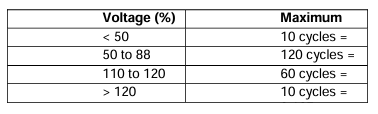
- Three-phase generation equipment must disconnect from KCBPU’s System for any loss of balanced three-phase voltage, or for single phasing condition within the maximum clearing times indicated above whenever voltage on at least one phase reaches the abnormal levels shown.
- Under-frequency or over-frequency events within the clearing times indicated below. All DG equipment shall follow the associated KCBPU frequency within the range of 59.3 Hz to 60.5 Hz. By mutual written agreement of both the DG Customer and KCBPU, different settings may be used for OF and OF trip levels or time delays.
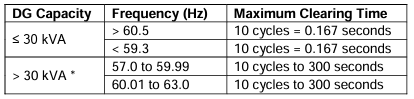
- Under-voltage (UV) or over-voltages (OV) within the voltage ranges and maximum clearing times indicated below. However, upon written mutual agreement between KCBPU and the DG Customer, different settings may be implemented for UV and OV trip levels or time delays.
- Additional Protection Schemes: The DG Customer must provide additional protection schemes to avoid damage to KCBPU’s Systems during normal and abnormal system conditions and events as follows:
- Automatic Synchronizing controls and relaying to insure a safe Interconnection with KCBPU’s Systems. Customers DG equipment must be capable of making interconnections with a minimum of voltage and current disturbances. Synchronous generator installations, as well as other installations, must meet the following tolerance limits delineated in Table 5 of IEEE Standard No. 1547, or as otherwise specified:
- Slipfrequency (M),
- Voltage deviation (AV),
- Phaseangle deviation (AO) less than ± 10%,
- Circuit breaker closure time compensation. (Not needed for automatic synchronizer equipment that can control machine speed)
- Amaindisconnect device to isolate the DG equipment for safety purposes during maintenance or in the event of emergency conditions. KCBPU requires that the Customer provide and install said disconnect device at Customer’s sole and total expense. The device must be accessible to and lockable by KCBPU personnel, either at the primary voltage level (which may include load-break cutouts, switches, elbows, and other equipment) or on the secondary voltage level (which may include a secondary circuit breaker or service disconnect switch). In either case, the disconnect device must be clearly identified and labeled as a DGdisconnect switch.
- DGswitching and fault interrupting equipment must have adequate fault interruption and withstand capacity, and be sufficient with respect to voltage class and current ratings to operate properly (i.e., within applicable industry standard practices and acceptable KCBPU limits) when connected to the KCBPU System.
- Tripand close circuits of the circuit interrupting device must be powered independently of KCBPU’s AC source in order to permit operation even after the loss of the KCBPU System connection.
- Automatic Synchronizing controls and relaying to insure a safe Interconnection with KCBPU’s Systems. Customers DG equipment must be capable of making interconnections with a minimum of voltage and current disturbances. Synchronous generator installations, as well as other installations, must meet the following tolerance limits delineated in Table 5 of IEEE Standard No. 1547, or as otherwise specified:
- TheDGCustomermustfurnish complete test results and documentation to demonstrate to KCBPU’s satisfaction that the Distributed Generation equipment and installation will be in compliance with these Policy requirements and as described below:
- Over/Under-Voltage Trip SettingsOver/Under-Frequency Trip SettingSynchronization schemeHarmonic Distortion Limits (tested at 25% of full load rating or as close to minimum rated operating level as possible, and again at full rated load) evaluated by reference to Tables 3 and 6 of IEEE Standard No. 1547DCCurrent Injection limitsAnti-islandingPrevention of connection or re-connection to a de-energized KCBPU SystemUnbalanced current trip settings (for 3 phase DG installations)Primarylevel fault current trip settingsSecondaryfault trip settings.Harmonics and Flicker: The DG equipment shall not be a source of excessive harmonic voltage and current distortion and voltage flicker as defined in IEEE Standard No. 519, and as further required in the current KCBPU Policy No. PE-310-001 Section 14.00, “Power Quality and Voltage Regulation.” Flicker occurring at the PCC must remain below the Borderline of Visibility curve on the IEEE/GE curve for fluctuations, less than 1 per second, or greater than 10 per second. However, in the range of 1 to 5 fluctuations per second, voltage flicker must remain below 0.4%. Whenever there is reasonable cause for concern on the part of KCBPU due to the nature of the generation and its location, KCBPU may require the installation of a power quality monitoring system to permit ongoing measurement and assessment of the DG Customer’s compliance with these criteria. Said monitoring system (if required) will be installed at the DG Customer’s sole expense. Situations where high harmonic voltages and/or currents originate from the KCBPU Distribution System and are known or identified as such at any time during the period of the Interconnection Agreement will be studied and assessed, and if KCBPU determines that such is appropriate a good faith attempt will be made to mitigate such situations through the written mutual agreement of the parties to the Interconnection Agreement.Direct Current (DC) Injection from inverter power supplies must be maintained at or below 0.5% of the full-rated inverter output current into the PCC.TheDGCustomer’s DG generated voltage shall follow, and not attempt to oppose or regulate changes in the prevailing voltage level of KCBPU at the PCC, unless specifically otherwise mutually agreed to in writing by KCBPU and the DG Customer in the Interconnection Agreement. Any DG installed on the downstream (load) side of KCBPU’s regulating equipment must not degrade voltage regulation provided to the downstream Customers of KCBPU also connected to or affected by voltage at the PCC.System Grounding: Each DG system shall be properly grounded in compliance with IEEE Standard No. 142-2007 “Grounding for Industrial and Commercial Power Systems,” or latest approved final editions of same standard, including all references incorporated therein, and NFPA 70 (latest edition adopted into Unified Government of Wyandotte County/Kansas City, Kansas ordinance.) The DG ground system must be sized to handle the maximum available ground fault current, and be designed and installed to limit step and touch potentials to safe levels as defined in IEEE Standard No. 80-2000 “IEEE Guide for Safety in AC Substation Grounding,” or latest approved final editions of same standard, including all references incorporated therein. All DG electrical equipment must be bonded and grounded in strict accordance with applicable federal, state, and local codes, ordinances and regulations, life safety codes, standards, NFPA 70 (latest adopted edition), and to the inspected approval of the local codes inspection authority, which is the Unified Government of Wyandotte County/Kansas City, KS.System Protection: A DG Customer must provide adequate protection to KCBPU’s Distribution and Transmission Systems as well as such DG Customers own system for conditions arising from the operation of its DG Facility. Each DG Customer must also provide adequate protection to its own DGFacility under any operating condition of KCBPU, whether or not the DG system is in operation or even connected. Such operating conditions of KCBPU and/or the DG Customer mayinclude, but not necessarily be limited to:
- Lossof asingle phase;Faults on the DG Customers own system or on KCBPU’s Distribution or Transmission Systems;Equipment failures;Abnormal voltage or frequency;Lightning, switching, or other surges;Excessive harmonic voltages;Excessive negative sequence voltages;Separation from supply;Synchronizing generation;Re-synchronizing the DG Customers generation after restoration of electric supply.
- Revenuemetering requirements depend on the type of generation and the type and size of the Interconnection. In all cases however, Customer will provide and install the meter socket and/or metering and CT cabinets as per KCBPU Metering Policy. KCBPU will own, operate, and maintain all the requisite metering equipment, including but not necessarily limited to: metering CTs, metering VTs, isolation and bypass test switches, CT shorting blocks, sliding link type potential terminal blocks, meters, and interfaces for remote automatic meter reading.ForSmall and Medium DG Customers, the revenue metering will consist of solid state single or three-phase bi-directional, four quadrant revenue class meters, which will display the delivered and received power flow into the Customers DG Facility. If the amount generated is greater than the amount purchased from KCBPU, the NET RESULT will be a negative value of kWh IN, and the demand register will record the maximum “NET DEMAND IN” with kW, kVAr and Power Factor. If such values are negative, KCBPU will compensate the DG Customer as provided in KCBPU Policy PE-310-001 Section 15.00 governing Net Metering for Distributed Generation Facilities. Whether or not there are any net charges to the DG Customer for electrical energy in any billing period, and whether or not the DG Customer is entitled to receive payment for the net balance of energy credited to the DG Customer, the DG Customer will in all cases remain and be responsible for paying all charges on each billing under the KCBPU rate schedules, just as any other such Customer in the appropriate Rate Class. If a DG Customer formally terminates net metering, KCBPU shall treat the end of the service period as if it were the end of a billing period and compensate the DG Customer as described in Section 15.0ForLarge DGCustomers, revenue metering will consist of one solid-state three-phase, bi-directional, four quadrant revenue class meter, or two uni directional lead/lag revenue class meters (In and Out). In either situation, the meters must be capable of metering and displaying Watts, ±VAr, VA, ±kWh, ±kVARh, and maximum demands on all quantities along with a complete load profile in every demand interval in dedicated mass memory. The meters will also measure harmonic content in AC waveforms. Finally, these meters will be capable of being read both locally and remotely through KCBPU’s Automated Meter Infrastructure (AMI) systems and equipment. Customers may not reset meters or otherwise tamper with meter settings, history, or configurations. The terms under which a Large DG Customer will be compensated for any excess capacity (if agreed by KCBPU) and/or energy delivered through the PCC will be as agreed to by KCBPU and specified in the interconnection Agreement with such Large DG Customer. Such compensation may, at KCBPU’s option, be on the basis of Avoided Costs. For purposes of this policy, Avoided Costs are the incremental costs of capacity or energy or both that but for the purchases from DG Facilities, KCBPU would either generate or otherwise purchase from other Area EPSs.The specific choices and styles of revenue metering will be determined by KCBPU after the Application for Interconnection has been approved and design work started. AMI or SCADA system protocols will be determined as needed in the process of Application.
- Over/Under-Voltage Trip SettingsOver/Under-Frequency Trip SettingSynchronization schemeHarmonic Distortion Limits (tested at 25% of full load rating or as close to minimum rated operating level as possible, and again at full rated load) evaluated by reference to Tables 3 and 6 of IEEE Standard No. 1547DCCurrent Injection limitsAnti-islandingPrevention of connection or re-connection to a de-energized KCBPU SystemUnbalanced current trip settings (for 3 phase DG installations)Primarylevel fault current trip settingsSecondaryfault trip settings.Harmonics and Flicker: The DG equipment shall not be a source of excessive harmonic voltage and current distortion and voltage flicker as defined in IEEE Standard No. 519, and as further required in the current KCBPU Policy No. PE-310-001 Section 14.00, “Power Quality and Voltage Regulation.” Flicker occurring at the PCC must remain below the Borderline of Visibility curve on the IEEE/GE curve for fluctuations, less than 1 per second, or greater than 10 per second. However, in the range of 1 to 5 fluctuations per second, voltage flicker must remain below 0.4%. Whenever there is reasonable cause for concern on the part of KCBPU due to the nature of the generation and its location, KCBPU may require the installation of a power quality monitoring system to permit ongoing measurement and assessment of the DG Customer’s compliance with these criteria. Said monitoring system (if required) will be installed at the DG Customer’s sole expense. Situations where high harmonic voltages and/or currents originate from the KCBPU Distribution System and are known or identified as such at any time during the period of the Interconnection Agreement will be studied and assessed, and if KCBPU determines that such is appropriate a good faith attempt will be made to mitigate such situations through the written mutual agreement of the parties to the Interconnection Agreement.Direct Current (DC) Injection from inverter power supplies must be maintained at or below 0.5% of the full-rated inverter output current into the PCC.TheDGCustomer’s DG generated voltage shall follow, and not attempt to oppose or regulate changes in the prevailing voltage level of KCBPU at the PCC, unless specifically otherwise mutually agreed to in writing by KCBPU and the DG Customer in the Interconnection Agreement. Any DG installed on the downstream (load) side of KCBPU’s regulating equipment must not degrade voltage regulation provided to the downstream Customers of KCBPU also connected to or affected by voltage at the PCC.System Grounding: Each DG system shall be properly grounded in compliance with IEEE Standard No. 142-2007 “Grounding for Industrial and Commercial Power Systems,” or latest approved final editions of same standard, including all references incorporated therein, and NFPA 70 (latest edition adopted into Unified Government of Wyandotte County/Kansas City, Kansas ordinance.) The DG ground system must be sized to handle the maximum available ground fault current, and be designed and installed to limit step and touch potentials to safe levels as defined in IEEE Standard No. 80-2000 “IEEE Guide for Safety in AC Substation Grounding,” or latest approved final editions of same standard, including all references incorporated therein. All DG electrical equipment must be bonded and grounded in strict accordance with applicable federal, state, and local codes, ordinances and regulations, life safety codes, standards, NFPA 70 (latest adopted edition), and to the inspected approval of the local codes inspection authority, which is the Unified Government of Wyandotte County/Kansas City, KS.System Protection: A DG Customer must provide adequate protection to KCBPU’s Distribution and Transmission Systems as well as such DG Customers own system for conditions arising from the operation of its DG Facility. Each DG Customer must also provide adequate protection to its own DGFacility under any operating condition of KCBPU, whether or not the DG system is in operation or even connected. Such operating conditions of KCBPU and/or the DG Customer mayinclude, but not necessarily be limited to:
- Where DG design changes necessitate that KCBPU make changes on its Systems, the DG Customer will pay for the complete costs of such changes. These changes might include, but are not necessarily limited to: addition of circuit reclosers, circuit breakers, capacitors, voltage regulators, protective relaying, or overhead or underground infrastructure depending on the DG size, location, and impact on the KCBPU System.
- DG Interface Testing:
- Testing of DG interfaces, protection, and controls is vitally important for the protection of the DG Customer, of KCBPU, and of other Customers. Therefore, DG interface design testing, commissioning, and demonstration testing shall be performed by the DG Customer, by the Customer’s equipment manufacturers, and by installation personnel to verify the correct design, installation, and operation of DG equipment and facilities prior to making parallel connection to KCBPU’s System. These tests must be passed successfully in all respects, to the satisfaction of KCBPU Engineering staff.Absent unusual or unanticipated circumstances, there will be no charge to a Small DG Customer, and no additional charge to a Medium DG Customer over the application fee, for any services performed by KCBPU in connection with testing. A Large DG Customer will be responsible to pay KCBPU for all costs and expenses associated with testing services performed by KCBPU.Standards for DG Interface Equipment: At the time of production, all interface equipment including inverters, discrete relays, controls, and miscellaneous equipment must meet or exceed the requirements of the following standards:ANSI/IEEE: C37.90, C37.90.1, C37.90.2, C37.98, C37.2, and C62.41;IEC:255-21-1, 255-22-2, and 255-5.Manufacturer Testing: Manufacturers must test specific generating units and associated protective and control equipment for product acceptance, as well as testing over time to demonstrate product durability, longevity, and reliability.KCBPUreserves the right to refuse connection of such equipment and devices to KCBPU’s System if, after review of said testing, it is deemed by KCBPU to be unsatisfactory or inadequate in any way.Reviewof Testing: If KCBPU deems that the submitted manufacturers test data results and information are insufficient or inadequate during the review of the initial application, KCBPU may request that the type testing be performed by an independent testing laboratory or service to verify the proposed system; such independent testing organization will be selected to the mutual written agreement of both parties to the Interconnection Application prior to performing such testing and certification.Verification Testing: Verification testing is used to prove to KCBPU and to the DG Customer that the equipment is installed correctly and functioning properly to operate successfully in parallel with KCBPU’s System. The testing will be preceded by a complete equipment inspection to verify said equipment is present and identical to that shown on the Application. All manufacturer verification testing must already have been performed and satisfactory in every way prior to such inspection. If wiring must be removed in order to perform certain tests, each wire and terminal must be clearly marked and identified with permanent labeling and marking to make clear to all parties of the need to do this. Verification testing must be performed by the DG Customer or Customer’s official designated representative as a final act of commissioning, and thereafter must be performed at least once every two years on or about the anniversary of date of final approval given by KCBPU. DG Customer shall continuously maintain certified copies of all verification test results and reports, and shall promptly provide copies of the test results and reports to KCBPU.Sincethe electrical characteristics of each generating unit are unique, the testing results obtained for any particular generator installation are not permitted to be applied as representative of all like-rated generating units, even if installed in the same facility. it is necessary to verify the operational capabilities of each generating unit during actual verification testing.Qualifications of Installers, Testing Staff, and Test Evaluators: Installers, testing staff and test evaluators must be qualified individuals who can demonstrate satisfactory training and experience in the generating units being installed and tested. Such individuals may include registered professional engineers, factory-trained and certified technicians, and those individuals who may be approved by KCBPU for the particular testing being done. KCBPU reserves the right to witness all verification tests or alternately, may require written certification that the installation has passed all tests, along with a professional engineering report and evaluation of all test results, along with the supporting test results and documentation.Commission Testing: After the initial inspection, and if the DG unit is determined to meet the Interconnection requirements, the final live testing for commissioning may proceed, but only in the presence of KCBPU Engineering Staff. Testing will begin with tests on all protective devices, systems, and controls to the written acceptance of KCBPU, before the generator can be brought on line. If accepted by all parties, the generator may be started, brought up to speed, synchronized, and closed in online, at which time the other remaining parts, devices, controls and systems will be demonstrated to the written acceptance of all parties. While online, testing will be conducted to verify proper protective equipment performance, metering of output, and KCBPU metering connections and operation.Performance Guarantee Testing: Perform an adequate battery of live testing and using test load banks or actual facility loads, to demonstrate successfully that the generator unit can maintain proper voltage regulation, load stability, frequency regulation, VAr regulation, throughout the generator’s practical output range of between 25% and 100% of rated kW and kVA at rated voltage. This will include measurements of voltage on all phases, current in all phases, real and reactive power in each phase, and measured power factor in each phase of each generating unit and in all units being tested. The report of measurements taken must be done with an acceptable power quality monitor, calibrated and traceable to national certification standards for metering accuracy, and the DG Customer or testing organization must furnish a complete report and supporting data in an electronic file format, or in hard copy, for all data taken. KCBPU shall be provided a diagram of how all connections were made, the instruments and devices used, and test methods, to the written acceptance of KCBPU. Should the test procedure, methods, or results not be done correctly as per the agreed procedure, then the testing organization must provide a detailed and accurate explanation for any deviations to KCBPU.Theacceptance in writing by KCBPU of all the above information, plus verification testing and final testing will constitute the official approval of KCBPU for Interconnection and Parallel Operation, once acknowledged in writing by a KCBPU Certificate of Acceptance for Interconnection and Parallel Operation. It does not represent in any way an acceptance of responsibility or liability on the part of KCBPU for the installation. It is only a statement that the installation appears to be correctly installed and functional at the time of testing. The DG Customer is and will remain solely responsible and liable for the installation, testing, operation, and proper maintenance of the equipment.
- DG Customers shall operate DG systems in strict accordance with the adopted requirements of KCBPU in its Service Standards and Regulations and by KCBPU Policy. If at any time, the operation of such DG systems fails to meet these Standards, Regulations, or Policies, the DG Customer must disconnect its generation equipment from the KCBPU System until the operating problems and deficiencies have been resolved to the satisfaction of KCBPU. Damages incurred to KCBPU’s Systems or equipment, resulting either directly or indirectly from the failure of DG Customer’s operation of DG systems in parallel with KCBPU will be paid for by the DG Customer.
- DG equipment operated by a DG Customer shall not cause excessive harmonic currents or voltages at the PCC that will interfere with KCBPU’s metering accuracy, proper operation of facilities, or with the quality of power at the PCCs of other Customers. Such effects may include but not necessarily be limited to: overheating of wiring or equipment, overvoltages, undervoltages, voltage flicker, or interference to radio or other telecommunications.
- If operation of DG equipment results in complaints from other Customers or KCBPU due to high voltage, low voltage, harmonic distortion, or voltage flicker as defined in KCBPU’s policies for Power Quality (see Section 13.10, bullet 7), the DG Customer may be required to disconnect its generation equipment from KCBPU until the problem is resolved to the satisfaction of KCBPU.
- TheDGCustomermust discontinue parallel operation when so requested by KCBPU after reasonable notice so that maintenance or repairs can be performed on KCBPU’s System. In an emergency situation, Customer shall discontinue parallel operation immediately once ordered to do so by KCBPU.
Power quality and voltage regulation
Overview:
KCBPU has adopted this Policy so that voltage and current spikes, sags, dips, flicker, surges, switching transients, and other distortions of voltage or current waveforms of KCBPU’s Customers do not adversely affect the quality of service past the Point of Common Coupling (PCC) Customer.
All Customers shall maintain proper power quality and voltage regulation on their own systems to prevent disruption to KCBPU’s infrastructure, KCBPU Electric Distribution or Transmission Systems (each a System) or the electrical systems of nearby Customers. KCBPU reserves the right to examine any and all Customers for compliance with this Policy, and to take any and all measures needed to guarantee such compliance.
Standards & Codes:
KCBPU adheres to current adopted electrical utility industry published standards for power quality and has incorporated the following standards by direct reference into this policy:
IEEE Standard 519 (latest adopted edition), “Recommended Practices and Requirements for Harmonic Control in Electric Power Systems”
Standard C84.1 (latest adopted edition), “Electric Power Systems and Equipment-Voltage Ratings (60 Hz)”
ANSI/IEEE Standard C57.110 (latest adopted edition), “IEEE Recommended Practice for Establishing Transformer Capacity When Supplying Non sinusoidal Load Currents”
ANSIIIEEE Standard C62.41 (latest adopted edition), “IEEE Recommended Practice on Surge Voltage and Low-Voltage AC Power Circuits”
ANSI/IEEE Standard 141 (latest adopted edition), “IEEE Recommended Practice for Electric Power Distribution for Industrial Plants”, (IEEE Red Book)
IEEE Standard 446 (latest adopted edition), “IEEE Recommended Practice for Emergency and Standby Power Systems for Industrial and Commercial Applications”, (IEEE Orange Book)
IEEE Standard 1159 (latest adopted edition), “IEEE Recommended Practice for Monitoring Electric Power Quality”
IEEE C2: “National Electric Safety Code”
NFDA70: “National Electric CodeSpecifications for Voltage:
- KCBPU Voltage Regulation: KCBPU is responsible for maintaining its nominal base voltage regulation for sustained voltage levels at the PCC according to its published Service Standards and Regulations, namely: +5% and -10% of its nominal standard service voltages.This, however, does not include the effects on KCBPU Systems caused by poor power quality that is the direct result of its Customers’ actions or equipment.
- Voltage Balance: The above voltage regulation limits also apply to all energized conductors for single phase and three phase Customers, so that total voltage balance is applied to all conductors. However, service supply voltage at the primary level shall be regulated by KCBPU within ± 2.0% of nominal rated voltage (before transformation).
- Capacitor Installations: Customer-owned and installed capacitor installations shall not increase distribution voltage levels at the Point of Common Coupling back towards feeder source buses by more than 5% of the nominal base voltage.
- Onsite Generation: Any Customers with onsite generation operating in parallel with the utility service at the Point of Common Coupling (PCC) shall operate said facility so that the voltage at the Point of Common Coupling is regulated to match KCBPU’s system voltage at all times. Refer to current Section 13.00 which deals with Parallel Generation Customers and KCBPU Requirements.
- Momentary Voltage Variations: Momentary voltage variations at the distribution substation source bus shall not exceed 3% of the nominal base voltage.
- Momentary Variations and Tolerances: Customers having extensive use of solid-state controlled processes, variable frequency drives, PLCs, automated processes, HID lighting sources, and other similar equipment shall adhere to the momentary allowable voltage variations shown in the “ITIC Voltage Tolerance Curve” presented in Chart 1.
- Momentary Voltage Variations, Special Cases: Large commercial and industrial Customers who have utilization devices such as injection molding equipment, electric arc furnaces, arc welding equipment, extensive HID lighting, database server banks, large variable speed drives, and motor loads controlled by solid-state controllers may be considered on a case-by-case basis to minimize momentary voltages and variations, the effects of light flicker, and their effects on nearby Customers of KCBPU or the KCBPU System itself. In such cases, KCBPU will study the situation, the nearby environment, adjacent users, and its own System to determine the source(s) of voltage quality and power quality issues. The end results of such studies and reviews will determine the measures that need to be taken by either the Customer (if the Customer is the source of the problems), other nearby Customers, or possibly KCBPU.
- Voltage Swells: Voltage swells are defined as an increase to between 110% and 180% of RMS voltage at the power frequency for durations from 0.5 cycles to 1 minute. Voltage swells will be evaluated using the appropriate portions of the “ITIC Voltage Tolerance Curve” in Chart 1 in Appendix A.
- Voltage Transients: Voltage transients are of two general types: oscillatory and impulsive. Oscillatory voltage transients are resonant “ringing” types of oscillations caused by the switching on of distribution or substation shunt capacitor banks, which can be dampened by circuit impedance, distance from the capacitor, transformer impedances, and proximity to other neighboring capacitors which contribute to the resonance or “ringing”. Impulsive transients on the other hand are caused typically by lightning strikes and occasionally line switching (to a much lesser degree). The Customer shall not apply harmful voltage transients onto the KCBPU electric system.
- Voltage Notching: Whenever AC voltage is rectified into DC voltage with solid-state switching devices or equipment, a phenomenon called “voltage notching” can occur, especially in poorly designed and low-end equipment. This describes a distortion to the pure AC sinusoidal waveform, which creates a “notch” in the wave at the time of commutation.
- A drawing which shows what a pure sinusoid waveform looks like when it is polluted with “voltage notching” is shown in Chart 2, “Graphic Example of Voltage Notching” (in Appendix A).
- Such notches typically have durations of less than a few microseconds (µsec), but they can last even longer, causing attendant damage, or loss of service at nearby sensitive equipment and processes, even in neighboring facilities or locations if not controlled or filtered. KCBPU also places strict limits on the maximum allowable “voltage notching” that a Customer can emit spuriously to its Systems. These limits and classifications are listed below in
- 1, “Low-Voltage System Classification and Distortion Limits due to Voltage Notching” (in Appendix A).
Allowable Power Factor Limits:
- Power Factor Limits: Customers shall maintain power factor at the point of service within the limits of 0.90 lag and 0.90 lead at the time of monthly peak demand, and within the limits of 0.85 lag and 0.85 lead at all other times during the billing period.
- DG Customers- Power Factor: For Customers with on-site generation who have been given permission by written agreement to operate in parallel with KCBPU, the allowable power factor shall at all times be maintained within the limits specified in the “Power Factor Limits” bullet above. Refer to current KCBPU Policy PE-310-001 Section 13.00
Harmonic Current Distortion Limits:
- Description of Harmonic Current Distortion: Any equipment which utilizes current in a non-linear or “choppy” manner will introduce “distortion” into a current waveform, and this is termed harmonic current distortion. Equipment typically capable of introducing such distortion ranges from computers to copy machines, fax machines, laser printers, fluorescent and HID lighting sources, power factor correction capacitors, variable frequency drives (VFDs) also called Adjustable Speed Drives (ADSs) or “pulse” drives), and single and three phase arc welding equipment.
- TheAllowable Total Harmonic: Current content at the PCC shall likewise be restricted to the limits specified in IEEE 519, where individual harmonic components are specified as percentages of the fundamental (first) harmonic’s magnitude
- Definitions of Harmonic-Related Acronyms- Abbreviations- Current Distortion:
- PCC =Point of Common Coupling
- TDD =Total Harmonic Distortion in Individual Harmonic Component
- ITHD = Total Harmonic Distortion in the Current Waveform
- SCR =Short Circuit Ratio (Isc / lL); where SCR is defined as the ratio of the total available short circuit current at the PCC, to the total fundamental load current drawn by the Customer at the PCC.
- Controlling Levels of TDD at PCC: The harmonic distortion limits outlined in Tables 3 and 4, in Appendix A, are only permissible provided that the transformer connecting the Customer to KCBPU’s System will not be subjected to harmonic currents in excess of 5% of the transformer’s rated current as stated in IEEE C57.110.
- TDDRemediation Methods: If the transformer is subjected to harmonic currents in excess of 5% of the transformer rated current the Customer shall either: reduce the TDD and THD levels to less than the maximum allowable levels, or request that KCBPU install a replacement unit capable of withstanding the expected levels of harmonic current (higher “k” factor rating, or higher rated kVA).
- Costsof TDDRemediation: TDD Remediation shall be done at the sole expense of the Customer as further described below. The decision to undertake this option rests solely at the discretion and choice of KCBPU’s Engineering Department, especially if adjacent Customers or KCBPU’s Systems are adversely affected by the root harmonic distortion and content.
- Ifareplacement unit is installed, the Customer shall be responsible to pay the actual cost difference between the original in-place transformer and the required larger or higher k-factor rated unit (including delivery and freight), along with the actual recorded costs for labor, equipment, service vehicles, tools, stores charges, overhead charges, burdens for materials, wire, connectors, terminations, pads, all costs associated with the removal of the old unit, and installation of the new unit.
Failure to Maintain Quality of Voltage, Current or Power within KCBPU Specified Limits:
KCBPU’s Customers, as well as KCBPU itself, must be constantly aware of their respective responsibilities to provide proper voltage on either side of the PCC. KCBPU on its part, pledges to make every good effort to provide adequate levels of voltage and voltage regulation on its various Systems, and will work in good faith with its Customers to make good on that pledge with due diligence.
The vast majority of all voltage and current quality issues are caused by the loads on KCBPU’s System, in other words, by its Customers, rather than from the utility side of the PCC, or more generically, “the grid.” Whenever a Customer experiences voltage, voltage regulation, and power quality difficulties, it is first incumbent upon the Customer to notify KCBPU, under the terms of the Service Standards and Regulations. It is noted that in many such cases, KCBPU may not know of such difficulties unless notified by the Customer. KCBPU will work with Customers to identify, track, and locate the source(s) of such problems, and then suggest ways to fix the problems, including (if necessary) those that might be found on its own System, if any.
KCBPU notes that it cannot and will not provide 100% quality voltage, 100% of the time. Provision of such voltage is not possible. Many variables exist in KCBPU’s service territory and environment, and also nationally, that have deleterious effects on KCBPU’s ability to provide such service. These variables may include severe weather, precipitation, wind, accidents, acts of God, vandalism, terrorism, normal wear and tear of physical infrastructure as well as events which might occur at any time outside KCBPU’s service territory on the regional “grid”. The interconnectedness of so many U.S. utilities has resulted in a multitude of scenarios which can adversely affect the quality of local electric service. The sharing of excess power capacity regionally or in an extreme emergency can have everyday working problems with variable equipment, designs, coordination, maintenance, and communications between different organizations. This policy properly defines reasonable, achievable system parameters for both KCBPU and its
Customers. Given the mutual responsibilities of any contract to provide service for a charge, this policy states the parameters under which Customers agree to take and use electric service from KCBPU. KCBPU has no direct knowledge of what types of equipment or processes are or have been installed on the Customer side of the PCC, and Customers shall assume responsibility that equipment on their side of the PCC does not interfere with KCBPU Systems or the electrical systems of the Customers’ neighbors.
Failure on the part of any Customer to properly maintain their systems on the load side of the PCC to within these adopted limits will result in KCBPU making reasonable demands of the Customer to correct such problems within the scope of this policy in a reasonable expeditious manner. If such corrections are not made, and good faith efforts are not seen, KCBPU reserves the right to make corrections for the Customer based on its best engineering judgment and knowledge of conditions at the PCC, and then to bill the Customer for such repairs. If such bills are not paid promptly in the same billing cycle, KCBPU reserves the right under its Service Standards and Regulations to terminate service to the Customer until proper compensation is made.
Net metering for distributed generation (dg) facilities
Overview:
Kansas law (K.S.A. 66-1,184) provides for “Contracts for parallel generation services between electric utilities and their Customers; terms and conditions; duties of Customer; renewable generation by certain community colleges, requirements, financing; generation included in state’s energy generation by wind power.” Certain provisions of K.S.A. 66-1,184 are applicable to municipal utilities such as KCBPU.
As such, KCBPU is obligated to provide metering devices as well as methods of accounting and compensation for “net” energy supplied to KCBPU by Customer owned renewable Distributed Energy Resources (DERs) interconnected with KCBPU’s electric distribution system.
This Policy applies to any KCBPU Customer (hereafter known as a DG Customer) who has received KCBPU’s approval to own and operate their DG Facility in parallel with KCBPU’s distribution system. The DG facility shall have capacity within the range described in Section 15.03, and shall comply with all provisions of Section 13.00 Interconnection & Parallel Operation of DG Facilities and Section 14.00 Power Quality and Voltage Regulation.
This document also provides basic requirements for the performance and energy monitoring features of net metering, the installation of same, the responsibilities and duties of both the DG Customer and KCBPU, and the types of information to be provided to the DG Customer, KCBPU, the ratepayers of KCBPU, and various governmental entities having an identified interest in these matters.
Nothing in this Policy shall abrogate any obligation to comply with all applicable Federal, State, or local laws, codes, or ordinances; nor with the Standards, Service Regulations, and Policies of KCBPU.
Standards and codes applicable to this policy include the latest adopted editions of:
IEEE 1547: Interconnection and Interoperability of Distributed Energy Resources with Associated Electric Power Systems Interfaces
IEEE C2: National Electric Safety Code
NFPA 70: National Electric Code, latest edition adopted into Unified Government ordinance
OSHA 29 CFR § 1910.269: Electric Power Generation, Transmission, and Distribution – current law
UL 1741: Inverters, Converters, Controllers and Interconnection System Equipment for Use With Distributed Energy Resources
Manufacturer’s Ownership, Operating and Maintenance Manuals as reviewed and accepted by both parties prior to beginning operation.Net Metering General Provisions:
- KCBPU shall provide net metering to its qualified DG Customers for renewable DERs, provided the DG and their DG Facility meet the requirements established in KCBPU Policies and in applicable codes and standards.
- This Policy is applicable to Small DG Customers (DG Customers that own and operate a DG Facility rated to generate less than 20 kVA single phase, or 170 kVA three phase, at the rated voltage at the Point of Common Coupling).
- The DERs at each DG Facility shall be appropriately sized to match the DG Customer’s anticipated electric load, not oversized to constantly export energy to the KCBPU electric system. If needed, KCBPU will work with the DG Customer to calculate the appropriate DER capacity based on historical load profiles.
- The Customer shall identify the AC power rating (in kVA) of the DER.
- Electric service is available under this Policy at points on the KCBPU electric system using a first-come, first-served basis, until the total rated generating capacity of all DG Facilities equals one percent (1%) of KCBPU’s peak demand during the previous year. KCBPU reserves the right to limit additional interconnections on the KCBPU electric system. Such determination shall be based solely on KCBPU’s engineering analysis and evaluation of the DER Facility, at the expense.
- Under this Policy, potential DG intending to install renewable DER facilities and/or interconnect to KCBPU’s electric system shall submit a properly completed Application for Interconnection and supporting documentation (e.g. design drawings, equipment data sheets) for KCBPU’s approval. Where new construction or modification of existing facilities is required, the Customer shall then apply with the Unified Government of Wyandotte County and Kansas City, Kansas for necessary building permits and inspections.
- After the Unified Government inspects and releases the permit back to KCBPU, the shall enter into a written Interconnection Agreement contract with KCBPU before operating the DER facilities. Interconnection Agreements are not assignable. Lease or consignment arrangements whereby a third party owns or operates the DG Facility are forbidden. As provided below, Interconnection Agreements shall terminate if the DG Facility changes ownership, or if the owner is no longer a KCBPU Customer. Any subsequent owner of a DG Facility who wishes to receive service under this Policy shall submit a new properly completed Application for Interconnection for KCBPU’s approval, and shall then enter into a written Interconnection Agreement with KCBPU before operating the DER facilities.
- Net energy shall be calculated and the DG Customer shall be billed or credited in each billing period, as follows:
- KCBPU shall measure net energy at the PCC using a single, digital, bidirectional meter located the DG Facility. These values shall be accumulated during each billing period in accordance with the normal metering practices for Customers in the same rate class.
- The net energy delivered from the DG Facility to the KCBPU’s electric system shall be credited to the DG Customer’s account in kilowatt-hours (kWh).
- If, during a given billing period, KCBPU supplies more energy than the DG Facility exported, the DG Customer shall be billed for the net electricity supplied by KCBPU per the applicable rate schedules(s), riders, and normal practices for Customers in the same rate class.
- If, during a given billing period, the DG Facility exports more energy than the KCBPU supplies at the PCC, the DG Customer shall be credited at a rate of 100% of the current Energy Rate Component (ERC) for the net kilowatt-hours (kWh). Resale of any electric service shall not be allowed under this Policy.
- For each billing period, the DG Customer shall still be responsible for paying all charges incurred, including but not limited to: Customer Charge, Facilities Charge, Demand Charge, Late Payment charge, Deposit Requirements, Special Charges and Fees, or any other assessments per KCBPU’s applicable rate schedule(s) and riders.
- An Interconnection Agreement and service under this Policy may be voluntarily terminated by either party at any time. The DG Customer is responsible for maintaining their DG Facility with the latest applicable codes and standards, as well as KCBPU Policies. The DG Customer shall notify KCBPU of any changes regarding the DG Facility (e.g. improvements, retirement, etc.) KCBPU may at its sole discretion choose to contact DG Customers about related changes, developments, and requirements.
- Interconnection Agreements will automatically terminate if the DG Facility is removed or disabled, if the DG Facility changes ownership, or if the owner is no longer a KCBPU Customer. KCBPU will treat the end of the service period as if it were the end of the billing period. If applicable, KCBPU will compensate the DG Customer for credits due in the interim.
- KCBPU’s Customer Service Department shall, by March 1st of each year, prepare and submit an annual net metering report to KCBPU Electric Operations, and the Electric Production Managers. The report shall include the following information for the annualized period ending December 31st of the preceding fiscal year.
- The total number of DG Customers beginning, added or removed each month, and year-end figures.
- The total estimated rated generating capacity of its DG Customers and any other net metering Customers during each of the periods in (a).
- A detailed report showing the names, addresses, and account numbers of every DG Customer and any other net metering Customer at the beginning and end of the calendar year.
- The total net energy received from DG Customers and any other net metering Customers during each billing period.
- The total metered amount of energy in each period and at year’s end, as produced by all DG Customers and any other net metering Customers.
- Neither the KCBPU nor the DG Customer may create, register, or sell Renewable Energy Credits (RECs) from energy produced at any DG Facility.
- KCBPU shall provide DG Customers with net metering at non-discriminatory rates that are identical with respect to rate structure, retail rate components, and any monthly charges, to a standard Customer of that rate class who does not own or operate a DG Facility. KCBPU may, however, use a special load profile for the DG Customer, which incorporates the DG Customer’s real-time generation, if such load/generation profile characteristics, along with others in a like situation or class, prove to be markedly different from a standard Customer of that rate class who does not own or operate a DG Facility.
- KCBPU reserves the right to charge DG Customers a reasonable application fee to cover KCBPU’s costs of engineering and field personnel.
- KCBPU shall not impose upon DG Customers any charges, equipment, or additional requirements except those specifically authorized by the Interconnection Agreement and KCBPU policies. Note that Insurance is subject to the terms of the Interconnection Agreement.
Meters and Metering:
- Each DG Facility shall be equipped with KCBPU-approved net metering equipment. KCBPU will furnish a single, digital, bi-directional meter. The DG Customer may be required to supply a meter base, CT cabinet, or other ancillary equipment. Refer to KCBPU’s Electric Service Standards.
- For safety and reliability, KCBPU may require the DG Customer to replace their existing meter-related equipment due to age, condition, or functionality. This requirement may arise at the engineering review phase or during witness-testing in the field. DG Customers are encouraged to be proactive in maintaining and replacing their equipment when necessary.
- KCBPU may choose to use an existing electric revenue meter for net metering if the following criteria are met:
- The existing meter is capable of measuring the flow of electric power both into and out of the DG Facility at the same rate.
- The existing meter is accurate within ± 0.2 percent when measuring power flowing from the DG Facility to the KCBPU electric system.
- If the existing electric revenue meter at the DG Facility is not suitable for net metering, KCBPU shall, at its own expense, install a new revenue meter in the DG Facility’s existing meter base. If the DG Customer for any reason necessitates another revenue meter change thereafter, KCBPU reserves the right to charge the DG Customer for its costs at that time.
- KCBPU shall require only one net meter per DG Facility, except in unusual Customer-owned installations where the Point of Common Coupling is connected to multiple electric services. See Section 13.00 and KCBPU’s Electric Service Standards for additional information.
- KCBPU may install an additional meter (at its own expense) at any time when it deems necessary or appropriate. The DG Customer may also request that KCBPU install an additional meter(s), at the DG Customer’s sole expense. This charge shall include the value of the meter equipment KCBPU’s time, material, overhead costs, and all other costs for installation.
- New net meters that are furnished and installed by KCBPU shall be of a modern, programmable, microprocessor design, and compatible with KCBPU’s networks and business systems. The meters shall have at least the following capabilities:
- Energy delivered from the KCBPU electric system within 0.2% accuracy
- Energy exported to the KCBPU electric system within 0.2% accuracy
- Rugged outdoor enclosure
- Forward-facing long life digital display
- Radio connectivity and network intelligence to allow remote readings
- The DG Customer shall install their meter base and ancillary metering equipment in a KCBPU-approved location at the DG Facility, in accordance with the National Electric Code and KCBPU’s Electric Service Standards. The DG Customer shall provide KCBPU with access to metering equipment.
Net metering for distributed generation (dg) facilitielectric service extensions: large residential, commercial and industrial developmentses
Purpose & Introduction:
Undergrounding of Service and Redundant Service
KCBPU is charged with developing and maintaining policies and procedures for carrying on the daily business of the utility. This policy applies to the creation and implementation of Large Electric Infrastructure Extensions, Additions or Improvements to provide adequate and efficient electric service which are considered beyond the scope of basic electric service extensions because of the size, scope, character or special needs of the requested extensions.
Large extensions are defined herein and shall include but not be limited to extensive additions of transmission and distribution conductors and structures, and other special additions beyond KCBPU’s basic electric service extensions rules and regulations for Large Residential, Commercial, and Industrial Customers, developments and subdivisions, as may be requested by the Applicant and as determined by KCBPU.
This Policy defines requirements and procedures for the study, design, construction and implementation of “Large Electric Service Extensions to Electric System Infrastructure” of primary distribution, sub-transmission or transmission circuits, or for additional substation infrastructure. It explains the role and obligation of the Customer and KCBPU for bearing the extraordinary added costs of large infrastructure extensions which are above and beyond the size, scope or extent of small extensions of service.
The Policy defines “Large Electric Service Extensions” as opposed to simple “Small Electric Service Extensions” along with other key terms and words.
KCBPU reserves the sole right and responsibility to provide electric service at the point of service to all Customers within its service territory in an efficient and cost- effective manner according to its Design Standards, Policies, Rules and Regulations, and Specifications.
KCBPU’s Electric Service Standards and Regulations state that standard basic electric service to any Customer shall be furnished using above-ground circuits on overhead structures. Underground electric distribution and service shall be provided if the surrounding area is already served by only underground electric service, as may otherwise be mandated by city ordinance, for special requirements in new residential, large commercial and industrial electric subdivisions and developments or for special requirements in other areas as approved by KCBPU. KCBPU requires that for underground electric service extensions to be provided in such cases, the Applicant must pay the cost of the underground electric service as an aid-to- construction fee. Advance payment of the estimated cost as determined by KCBPU, is required. Additional payments by the Customer and/or refunds or credits by KCBPU resulting from adjustments to such estimate and reconciliation of the final project cost to the estimated cost shall be made in accordance with this Policy as described herein.
This Policy does not in any way conflict with or supersede the provisions contained in the KCBPU Adopted Fee Schedules, including but not limited to considerations for redundant service for Large Electric Service Extensions. The Customer may request redundant electric service, but if such service is approved by KCBPU, the Customer must pay the full cost of the redundant electric service. Advance payment of the estimated cost of redundant electric service, as determined by KCBPU, is required. Additional payments by the Customer and/or refunds or credits by KCBPU resulting from adjustments to such estimate, and reconciliation of the final project cost to the estimated cost, shall be made in accordance with this Policy as described herein.
Project Creation
Customer shall make written Application for Service to KCBPU through the Electrical Engineering Department. The Service Application shall explain the size, scope, and extent of the proposed Electric Service as defined below.
Electrical Engineering shall review the Customer’s Service Application to determine whether the proposed Service can be provided by KCBPU’s existing electric system or whether the new Service will require large extensions, additions, modifications, or configuration changes to KCBPU’s Electric System. This shall include but not be limited to overhead or underground structures, new distribution or transmission circuits, circuit breakers and breaker bays, overload and short circuit protection, source transfer switching, redundant service, or new substation capacity to properly deliver service to the Customers.
The Customer’s Service Application shall include data on loads and any other technical information in support of the request, sufficient to allow the Electrical Engineering Department to accurately determine the scope and extent of the proposed Service Application Project.
Project Definition:
Upon request by Electrical Engineering, Customer shall provide additional information such as plans, drawings, expected size and type of loads, building sizes, load projections and extraordinary or special service requirements before the Application for Service can be considered complete.
The Customer or designated agent(s) shall submit in the Service Application a Project Request to the Electrical Engineering Department. The Project Request shall include but will not be limited to:
- Basic Project Definition – Provide a plat map or preliminary layout of the proposed area containing or comprising the total Project;
- Description – Provide a detailed description of the proposed Project in lay terms outlining its general scope, total size and number of loads and Customers, and locations of users.
- Preliminary Estimate of Costs – Customer must furnish a preliminary estimate of costs for the proposed Project.
- Technical Information – Furnish technical information, catalog cuts, and specifications of performance for any special items defined in Item 2 above, which might require special service or connections, to allow proper review by Electrical Engineering.
- Other Considerations – Furnish such other information required by the Electrical Engineering Department for any special needs of the development.
- Project Schedule – Submit a Project Development and Construction Schedule including desired date of temporary and permanent service, commissioning, completion, number of phases of staged development, and levels of demand and voltage at each stage of completion so that Electrical Engineering can properly determine the resources, staff, materials, equipment, associated hardware, and materials required to achieve an integrated Project solution.
If the proposed scope, costs, timelines, or schedules are determined to be unreasonable given the available resources, budget, and capital funding, the Electrical Engineering Department shall continue to meet with the Customer and designated agents to attempt to define a mutually agreeable Project Scope and Schedule (together known as the “Project Definition”).
Extensions of Electric Service Infrastructure (whether basic, small or large) are and will remain the exclusive property of KCBPU. The costs of developing such extensions under this Policy are considered to be costs of extending electric service to the Customer, but are not to be considered as assets of the Customer in any way. The costs must be paid for by the Customer in order to receive electric power and energy. Advance payment of estimated costs, additional payments by the Customer and/or refunds or credits by KCBPU resulting from adjustments to such estimate, and reconciliation of the final project cost to the estimated cost, shall be made in accordance with this Policy as described herein.
After the Service Application and Project Definition have been completed, reviewed, and approved by the Customer and KCBPU the Electrical Engineering Department shall prepare a Preliminary Design Statement describing the approved proposed requirements, schedule, needed resources, preliminary estimates of the Project cost, and preliminary layouts for purposes of Preliminary and Final Design Phases.
Project Preliminary Design and Final Design of the large extensions to KCBPU’s electrical infrastructure shall not begin until the Project Scope, Schedule, Costs and Payments Schedules have been determined and approved by KCBPU, and all payments made for required study fees, deposits, and advance payments by the Customer as required by KCBPU Policy.
- Electrical Engineering shall assign a designer or team from the Electrical Engineering staff (or a designated contract consultant).
- Customer shall assign a designated contact person for the Project to consult with the KCBPU designer or team.
- These parties shall be the primary designated points of contact for the Customer and KCBPU respectively on all Project correspondence, scheduling, field work, coordination, and design data.
- KCBPU’s design team (or design professional) shall prepare Preliminary Design Documents including (as necessary) drawings, materials, and any other design issues as may be required for the Project. This shall become the foundation document for final design and act as the vehicle for the first series of pre-construction meetings with the Customer and KCBPU.
- Once reviewed and approved as to scope, completion, and accuracy, this document shall be used to guide the Final Design of the Large Electric Service Extensions.
- At this time, KCBPU shall invoice Customer for any required advance payments, purchased materials and goods in stock. Final design shall not proceed until the Customer has made payment on the invoices. Any service or extension allowances, fees, contributions in aid of construction, or other charges applicable as per KCBPU Policy Number PE-310-002 shall be applied to this invoice.
Following completion and acceptance of the Preliminary Design Phase documents, Final Design shall begin. Dependent upon the scope and size of the Project, this may involve detailed design drawings, plans, standard detail drawings, materials lists, and refined estimates of costs, including credits for contributions-in-aid-of-construction and allowances.
During Final Design, changes in design, scope, Project timeline, and budget may occur subject to site conditions and the following circumstances:
- Design Changes – if design changes are requested in writing by the Customer (other than minor procedural modifications) KCBPU shall review the requested revisions to the overall Large Service Extensions. If approved, the Transmission and Distribution (T&D) Designer shall present the proposed modifications to the Electrical Engineering Department for review and approval. Major changes shall include, but not be limited to: scope, timeline, budget, delivery, product availability, product substitution, site conflicts, changes made to the Project Layout or Scope, and unforeseen obstructions and site conflicts.
- Budget Changes – if changes are initiated by the Customer on the Project amounting to more than 2% of the original Project Budget as defined in the accepted Preliminary Design Documents, the parties shall meet and review the proposed changes to the budget, but shall not proceed until the changes are approved by KCBPU and the Project Budget is amended.
- Changes in Project Scope – Any major changes to the Project Scope shall require a review by the T&D designer, the Senior T&D Engineer and the Director of Electrical Engineering, and personnel or agents of the Customer after the requirements are deemed necessary. If approved, the Design Documents will be changed, and the changes shared with all affected parties along with a Statement of Impact on the Project. Minor changes in Project Scope shall be submitted as a matter of record, and must be submitted for approval before proceeding further.
- Project Timeline Changes – Any major changes to the Project timeline by either the Customer or KCBPU which have arisen or are reasonably expected to arise must be addressed in a prompt and judicious manner. The parties shall meet and review the proposed changes to the Project timeline. Any changes in the timeline resulting from said meeting and review will be recorded in a Project Timeline Change Document with the Customer and KCBPU advised.
After the Final Design Documents are completed, the T&D designer, the Senior T&D Engineer, the Director of Electrical Engineering, the Manager of Electric Operations, the Customer, and KCBPU management (as applicable) shall meet to review the Final Project Design Documents for approval to construct. This may require further modifications as directed in or subsequent to such meeting; if so the Documents shall be revised and re-submitted until approval is given by KCBPU.
Large Electric Service Extension Agreement Phase; Payment of Estimated Costs
KCBPU shall prepare a “Large Electric Service Extensions Revenue Agreement” for the Customer’s review and execution in four original counterparts. Such Agreement will include but not limited to: definitions, scope of the extensions, schedules, estimates of Project Costs, and provisions for applicable allowances, advance payments, and deposits, along with exhibits in support thereof.
The Large Electric Service Extensions Revenue Agreement shall be executed promptly after the completion of the final Design Phase. The Agreement must be executed before the Project Construction Phase can begin.KCBPU shall promptly invoice the Customer for all monies due KCBPU under the terms of the Large Electric Service Extensions Revenue Agreement as executed.
The Customer shall promptly make payment in full on the invoice, before work can begin. The Project work shall not proceed until the invoice is paid in full in U.S. dollars, via wire transfer, cashier’s check or certified check drawn on the account of the Customer using an acceptable financial institution or bank.
The above provisions relating to the submission of an invoice by KCBPU to the Customer and the obligation of the Customer to pay such invoice in full prior to commencement of the Project work shall be applicable to any provision contained in this Policy or otherwise in the KCBPU Policies and Procedures requiring advance payment of estimated costs, whether or not a Large Electric Service Extensions Revenue Agreement has been entered for the project in question.
Construction Phase:
KElectrical Engineering shall promptly order equipment, hardware, and materials items according to the Final Design requirements. These items shall be charged to the Project Budget accounts as they are received into stock or drop-shipped at the Project Site.
After these purchases are ordered, the Electric Operations Division crews, contractor labor (if any) and needed equipment shall be retained, scheduled and coordinated. The Project shall enter the Execution Phase, beginning with surveys, layouts, staking, and construction with available materials.
A KCBPU representative shall be assigned as a Project Manager/Inspector to effect the installation and implementation of the Final Design based on the Department’s workload, schedules, and the overall needs of KCBPU. The Project Manager/Inspector shall work to achieve the efficient completion of the Project with the approval of the Senior T&D Engineer, especially if changes in scope, budget, project direction, or time of completion arise.
The Project Manager/Inspector shall maintain an up-to-date, orderly record of Project Progress, distribute Project Report Forms to the Senior T&D Engineer, and maintain the Project Record file for permanent reference by KCBPU.
The Customer’s designated contact person and the KCBPU Project Manager/Inspector shall each maintain correspondence and coordination on a regular basis as required by the overall Project Needs. Together they shall record the results of all informal or formal meetings, and the conclusions of on-site discussions which shall be added to the permanent Project Record.
Either the KCBPU or the Customer may issue Requests for Change Order, Field Orders, or Contract Modifications as required by such matters as site conditions, the schedule, availability of materials and supplies, or changes to the Project Scope. However, no work shall begin on such proposed Changes until a Change Order, Field Order, or Contract Modification has been executed and approved. Any such changes which cause a change in the overall Project Cost shall be promptly invoiced to and paid by the Customer (if an increase in overall Project Cost). If there is a decrease in overall Project Cost and such overall Project Cost is lower than the amount of estimated costs for which the Customer advanced funds to KCBPU, KCBPU shall promptly refund the difference; provided that such amount may be held as credit for anticipated future project cost increases in appropriate circumstances. Prompt payment shall be paid within 30 days of approval thereof by the invoiced party, unless the terms of the executed and approved Modification explicitly provide otherwise. The Agreement Modification shall be made a part of the Agreement by reference and attached to the original Agreement as an Exhibit thereto.
As the Project construction begins, Customer shall make Application for Temporary Electric Service to KCBPU’s Engineering Department and shall identify all locations and desired service capacities, phases, and voltages at which such temporary services are required within the Project Scope. Payment for Temporary Service shall be processed according to KCBPU’s Adopted Fee Schedules.
Project Acceptance Testing:
After key project components and phases are installed, but before implementation or acceptance for final or partial use, they shall be tested and commissioned according to appropriate standards for correct installation, performance and quality control. The Project Manager/Inspector shall maintain records of all test results, interpretation, and corrections (if needed), before acceptance for incorporation into the Project.
Operational testing adequate to demonstrate successful Project operation shall be performed according to a written plan prepared by the Project Team, and results thereof will be maintained as part of the Project file.
After commissioning and proper operation is achieved, the Project Manager/Inspector shall execute a Project Acceptance document listing the date said acceptance was issued, along with appropriate documentation supporting such conclusions as may be called for in the Project Final Design Documents or the Contract Documents.
Final Acceptance:
Once the Project has been built, installed, tested, commissioned, placed into service, and required Training has been performed, the Project Manager/Inspector shall prepare multiple counterpart copies of the complete Project Manual including but not limited to as-built drawings, change orders, operations and maintenance documents, bills of material suggested spare parts, complete item lists, test records, suggested schedules of maintenance or updating, and records of all software, operating systems, firmware, and programming licenses.
The Project Manager/Inspector shall also include in the Manual the final installed cost of the Project, along with copies of Requisitions, Invoices, Payments, and summaries of all Project materials, equipment, labor, contracts and other sundry services, and submit same to the KCBPU.
Permanent Electric Service Agreement:
If the Project Extensions inure to the benefit of a single party Customer for the purchase and use of electric energy after the completion of the extensions, the Customer shall promptly make Application for Permanent Electric Service to KCBPU’s Electrical Engineering Department for the Rate Tariff Class designated by KCBPU as appropriate for this level of use. KCBPU shall prepare and deliver four duplicate original counterparts of KCBPU’s standard Power Service Agreement in accordance with the terms and conditions of the Rate Manual of KCBPU and appropriate rider attachments as may be applicable. Permanent electrical service, metering and ability to use the services under this tariff shall not be furnished to the Customer until the Power Service Agreement has been fully executed and three of the duplicate counterpart originals have been delivered to the KCBPU Electrical Engineering Department. Except as may otherwise be agreed to by KCBPU in such Agreement, the term of the original Agreement shall be for five years from the date of execution, with year-to-year renewal after that term. If the Customer cancels the Electric Power Service Agreement prior to the end of the original term for any reason except those enumerated in the terms of the Agreement, the Customer shall be declared as in default of the Power Service Agreement and shall be disconnected with notice. The Customer shall be responsible for any energy, demand, Customer, facility and metering charges as of the date of disconnect plus any other costs incurred by KCBPU in handling the contract default.
Project Final Payment:
The final project summary of costs shall be prepared for presentation to the Customer and KCBPU management. Once the final summary of costs has been reviewed and approved by KCBPU, and there has been a reconciliation of actual to estimated costs, if the actual costs were less than the estimated costs for which the Customer made a deposit with KCBPU, a refund of the difference shall be made to the Customer. The KCBPU will pay no interest on the Customer’s deposit or on any non-refunded balances. If the final actual cost of the project is greater than the estimated cost, the Customer shall make an additional payment to the KCBPU for the difference. Any outstanding project costs due and payable by the Customer shall be paid promptly, and must be paid before permanent electric service can be provided.
Dismantling of facilities located on surplus property removal of appurtenances and structures
Overview
To describe the removal of appurtenances and structures on KCBPU’s property when the premises is abandoned, and the property is deemed surplus.>
Dismantling of Facilities Located on Surplus Property
When KCBPU determines that a substation, water tower, or pumping station site is no longer needed for any utility operations and the facilities which remain have no value to a potential buyer, management and the staff will determine whether a dismantling effort is economically feasible. If found to be economically feasible, and if dismantling of facilities on said surplus property is of benefit to the surrounding community, KCBPU shall undertake to dismantle the facilities on the property and remove appurtenances and structures.
The degree of dismantling shall depend upon a cost-benefit analysis comparing the benefits of removal of appurtenances and structures to the local community versus the costs of the removal effort. When possible, KCBPU should attempt to take advantage of asset and investment recovery by means of scrap metal solutions, oil recycling, etc.
KCBPU will mitigate any environmental issues that resulted from the utility facilities on the site. 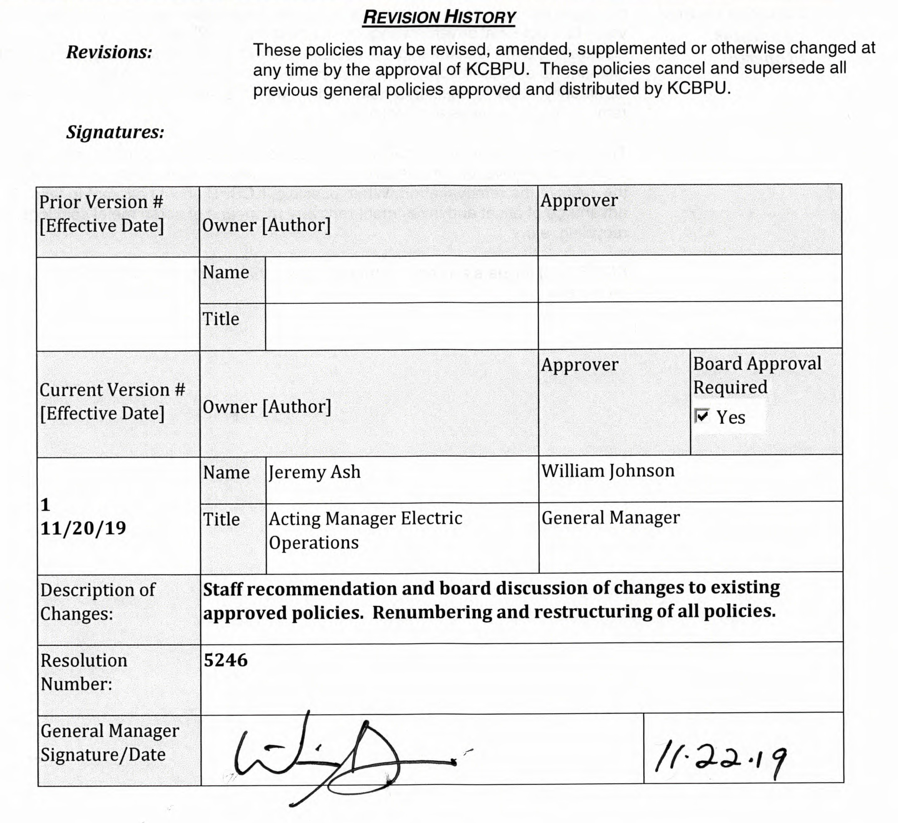
Electric Adopted Fee Schedule
General
General
The Kansas City Board of Public Utilities (KCBPU) provides electrical power in accordance with its Rules and Regulations, Electric Service Standards, the latest National Electrical Code (NEC) edition on file with the Unified Government of Wyandotte County/Kansas City, Kansas, and ANSI/IEEE C2 (National Electrical Safety Code, or NESC), latest edition in effect with the KCBPU, along with appropriate state laws, local ordinances, and statutes as may be in force within the jurisdiction.
KCBPU owns, operates, and maintains a system of overhead and underground electric transmission and distribution circuits throughout its service area at the right- of-way line, at which point it makes electric service available for customer extensions.
KCBPU will further extend its distribution facilities, including conductors, poles, transformers, conduit, etc., to the right-of-way line in areas where electric distribution service is non-existent or in need of upgrade due to increased customer power requirements or building development.
The costs to provide and install overhead distribution facilities to property lines are absorbed by KCBPU as part of its mission to provide electrical service for the development of the community inside its electric service area.
In areas where the Unified Government of Wyandotte County/Kansas City, Kansas (Code of the Unified Government of Wyandotte County/Kansas City, Kansas Chapter 27 – Planning and Development, Article VII – Subdivisions, Division 3 – Required Improvements, Sec 27-317 – Underground Wiring) or other local covenants/rules require underground infrastructure, the customer is responsible for the additional costs that are incurred in order to comply with any such requirements.
The customer is expected to provide KCBPU with necessary rights-of-way, utility easements, and rights of ingress/egress in order to install and maintain any of its facilities that may be on customer property.
The following general schedule of charges for service, service extensions, or miscellaneous charges is for work performed by KCBPU to extend distribution facilities as service connections onto customer property, based upon specific customer requirements to take service. The fees, charges, costs, etc. do not include any required sales tax or PILOT as may be required.
Single customer – single phase overhead extensions
Overhead Line Extensions:
- An application for single-phase electric service extension is “allowed” a one span extension of existing primary or secondary distribution lines from existing KCBPU circuits onto customer’s property.
- Applicants requiring an extension (whether primary or secondary) will be assessed the total Work Order Cost of the extension less the Allowance as follows:
- Basic Allowance: $1,000.00 (up to 200 Ampere Service)
- All-Electric Allowance: $1,200.00 (200 – 400 Ampere Service)
Overhead Service Application Charges:
- As part of an application for new single-phase overhead service or upgrades to an existing single-phase overhead service, KCBPU will collect a Service Charge as follows:
- Engineering Application and Meter Fee: $75.00
- Meter Base Fee: $75.00
Relocation of Upgrade of Overhead Service Conductors:
- As part of an application to relocate or upgrade existing overhead single-phase service conductors, KCBPU will collect a Service Charge as follows:
- Relocate one end (at building) of service entrance to a new location: $200.00
- Meter Base Fee: $75.00
New Underground Service Extended from Overhead Distribution System:
- As part of an application for new single-phase underground service extended from KCBPU’s overhead distribution system or for the replacement of an existing single-phase overhead service with a single-phase underground service, KCBPU will collect a Service Charge as follows:
- $1,200.00 per Service (Up to 200 Amperes)
- $1,700.00 per Service (Up to 400 Amperes)
- Removal of the existing overhead service: Actual Work Order Cost
For extensions greater than 100 feet in length as measured from the base the pole to the point of service, the charge shall be the actual costs incurred for the entire extension.
New Underground Primary Extended from Overhead Distribution System:
All-Electric Service Customer Allowance (larger than 200 Amperes up through 400 Amperes): $ 1,200.00
UNDERGROUND RESIDENTIAL SERVICE
Areas Served with Underground Electric Distribution:
- Underground electric subdivision service is only provided via front lot line underground distribution circuits and layouts.
Underground Service Application Charges:
- To secure each application for single-phase underground residential service, KCBPU will collect a Service Charge for new services as follows:
- Engineering Application and Meter Fee: $75.00
- Meter Base Fee: $75.00
Single Customer – Single Phase Underground Extension Allowance:
- An applicant for single customer, single-phase underground service extension is “allowed” one 100-foot maximum extension of primary or secondary lines from existing KCBPU underground circuits onto customer’s property. Applicants requiring a single-phase underground extension that is greater than 100 feet in length will be assessed the total final Work Order cost of said extensions less the following allowance:
- Standard Underground Service Customer Allowance (up to 200 Amperes Service): $ 1,000.00
- All-Electric Service Customer Allowance (larger than 200 Amperes up through 400 Amperes): $ 1,200.00
Single Phase – Single Customer Relocation or Upgrades to Service:
- As part of an application to relocate or upgrade existing underground single-phase service conductors, KCBPU will collect a Service Charge as follows:
- Relocate one end (at building) of service entrance to a new location: Actual cost
- Meter Base Fee: $75.00
Underground distribution extensions to subdivisions
Underground Distribution Extensions to Subdivisions:
Underground primary and secondary distribution and services consisting of primary distribution voltage feeder lines, transformers, and secondary mains will not be considered in subdivisions and developments platted prior to January 1, 1973.
Due to the requirements of the Unified Government of Kansas City, Kansas (Code of the Unified Government of Wyandotte County/Kansas City, Kansas Chapter 27 – Planning and Development, Article VII – Subdivisions, Division 3 – Required Improvements, Sec 27-317 – Underground Wiring), the electrical infrastructure for new subdivisions and developments are to be installed underground. Therefore, KCBPU will charge the customer/applicant the cost difference between an overhead electrical infrastructure design and an underground electrical infrastructure design.
Payment to KCBPU from the Developer for this cost difference must be received in full before installation will be performed by KCBPU.
The Developer shall be responsible for providing the electrical infrastructure to the lot lines at the edge of public rights of way, to allow for the installation of underground primary and secondary distribution circuits as described below:
- All trenching required for installation of underground distribution circuits
- Supplying and installing all required electrical duct bank, conduits, and appurtenances, as specified by the KCBPU
- All backfilling of electrical trenching, upon inspection and acceptance of such by the KCBPU’s representatives
- Installation of all required transformer pads, electrical pedestals, and enclosures, as required and specified by the KCBPU (pedestals and enclosures must be purchased by the Developer from the KCBPU)
KCBPU shall have final approval of the electrical infrastructure design and requirements. No installation shall be done by the Developer until this approval has been granted by KCBPU.
KCBPU will furnish and install all required primary and secondary distribution within the right of way, to include:
- Primary and secondary conductors
- Electrical pedestals and enclosures (installed by the Developer, to meet KCBPU specifications)
- Distribution transformers
- Distribution switches, if required
- All required electrical terminations in pedestals, transformers, switches, etc., as required
Residential services to multi-unit buildings and apartments
Residential Services to Multi- Unit Buildings and Apartments:
Applications for service extensions to multi-unit buildings and apartments will be assessed on a per meter basis in the form of up-front payments, as follows:
- For Multi-Unit Building Developments:
- Duplex or more units in the same building: $250.00 per meter
- Community buildings and other meter requests for apartment developments: $250.00 per meter
The size and type of required service plus the required number of meters for these types of installations is solely determined by KCBPU Electrical Engineering.
Mobile home services
Mobile Home Services:
Mobile Home Services: $ 75.00 per Meter
Commercial and industrial customers
Commercial and Industrial Customers:
- KCBPU Requirements:
- KCBPU will extend its overhead distribution system to the property line of the applicant at its own expense, as per KCBPU Standard Policy.
- KCBPU will provide one point of overhead service at that location, including transformer and primary and secondary service connections, at its own expense.
- (As a minimum average, this amounts to a KCBPU Allowance of $10,000.00.)
- For KCBPU distribution extensions to new commercial or industrial subdivisions/developments, refer to section 4.00 of this Adopted Fee Schedule for costs and other related items.
- Customer Requirements:
- Customer agrees to meet KCBPU’s Electric Service Standard requirements including (if necessary); installation of transformer pad, all conduits, grounding systems, and secondary service entrance.
- The Customer must pay KCBPU for all service charges before installation will be performed by KCBPU.
- Service Upgrades: For upgrades to existing commercial or industrial services, the customer will be charged the following:
- Application and Meter Fee: $75.00
- Meter Base Fee: $75.00
- Service Charges: Service Charges for new commercial or industrial services will be calculated depending on service size, intensity of electrical requirements, and needs, in accordance with current BPU pricing philosophy, Service Standards, and Policy.
- For single phase and small demand (≤500 kVA) three phase services, all or a portion of these charges could be refunded if total electric heating is installed as a part of the service requirements.
- For large demand (>500 kVA) three phase services, KCBPU will determine if any charges are required after an economic impact analysis has been performed.
- Facilities Agreement: A Facilities Agreement may be required if determined to be in the best interests of and at the sole discretion of KCBPU.
Distributed Generation (DG) Facility:
Distributed Generation (DG) Facility:
Applicants submitting on Interconnection for Distributed Generation (DG) Facility shall pay an application fee along with said application
- Application fee for small DG connection (Residential): None
- Application fee for small DG connection (Commercial): $50.00
- Application fee for medium DG connection: $500.00
- Application fee for large DG connection: $1,500.00
Miscellaneous charges & incentives
Miscellaneous Charges:
- Rock Removal Charges:
- Removal by Machining: $150.00/Cu. Yard
- Solid Rock (requiring blasting Removal): $250.00/Cu. Yard
- Underground Distribution Extensions:
- Within the Public Right-Of-Way: Actual Work Order Cost
- Temporary Services (metered or unmetered)
- 120/240V, (1 phase, 3 wire) with no extension required: $250.00 per address
- Temporary Services that require an extension or for all other service voltages: Actual Cost of Installation and Removal
- Customer/Developer Requests to Remove Overhead Secondaries or Primaries, and Re-Install Underground: Actual Work Order Cost
- Engineering & Administration Time Charges for Plan revisions requested by Customers after Initial Approval of Work Orders: $100.00 per hour per person.
- Residential Re-Development Project Requests to Remove Existing Circuits, Clearing the Way for Re-Platting and New System Installation: Actual Work Order Cost
- Redundant Service: Redundant electric service may be provided at the request of the customer upon approval by KCBPU at Actual Cost.
- Development Review Committee (DRC) Electric Plan Review Service Fee: $250.00
- Electric Distribution Design Services Fees:
- Residential Subdivisions
- $100.00 per lot, first fifteen (15) lots, $50.00 per lot thereafter
- $50.00 per lot for additional phases, max $5000.00 per phase
- Other Residential, i.e., apartments, etc.
- Flat $2000.00 fee
- Commercial Developments
- Flat $2500.00 fee
- Industrial Developments
- Flat $5000.00 fee
- Residential Subdivisions
- Short Circuit Engineering Study
- Determine available short circuit current at 15 kV substation switchgear bus: $50.00
- Perform detailed Engineering Study to determine available short circuit current at secondary terminals of customer distribution transformer (per location): $500.00
Residential and/or commercial electrically heated developments
Residential and /or Commercial Electrically Heated Developments:
For space heating in residential applications and space heating and/or process heating in commercial applications developments may be eligible for refunds of service construction charges, upon completion and verification of installed heating on project. Contact the Director of Economic Development Services for details and procedures.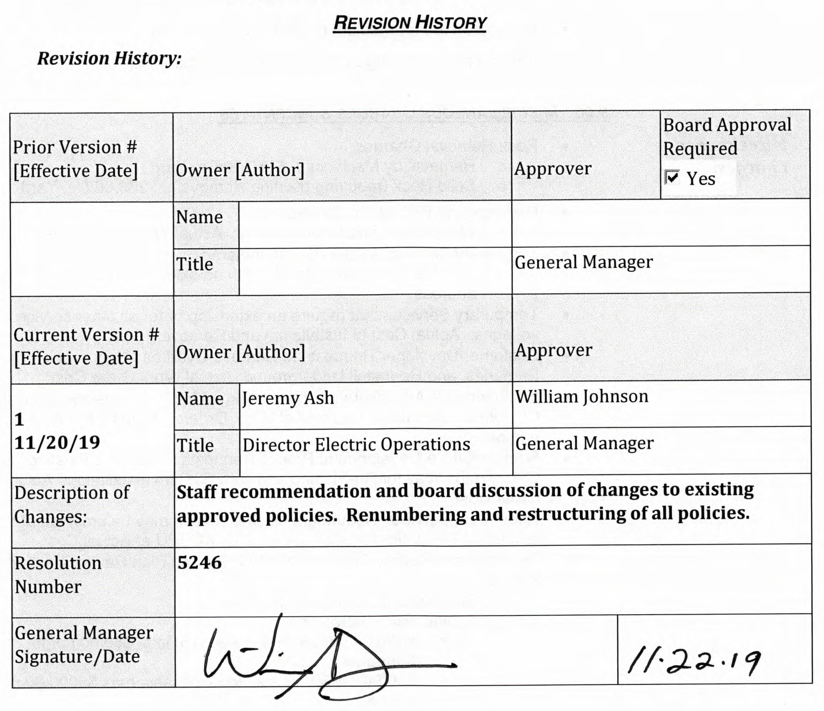
Electric Policy Appendix A
Chart 1: ITIC Voltage Tolerance Curve
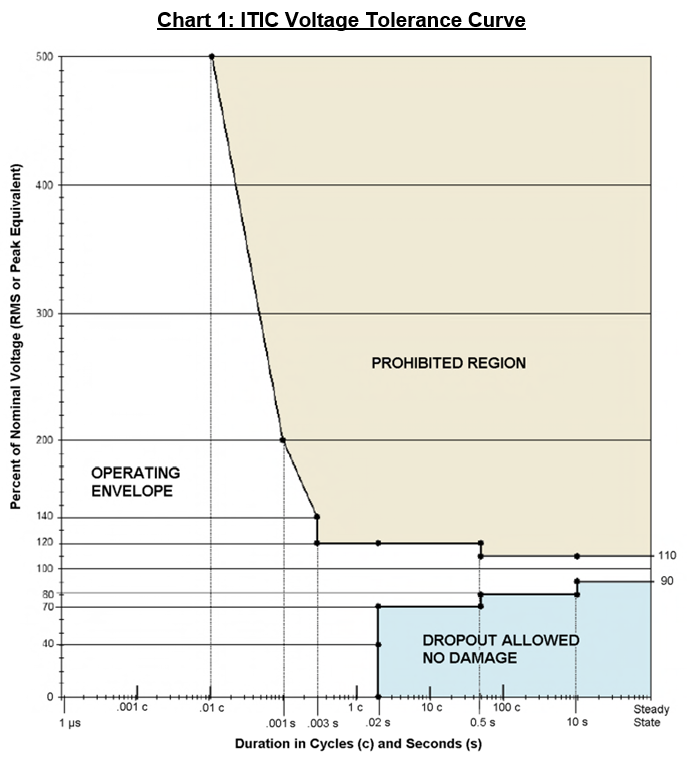
Chart 2: Graphic example of voltage notching
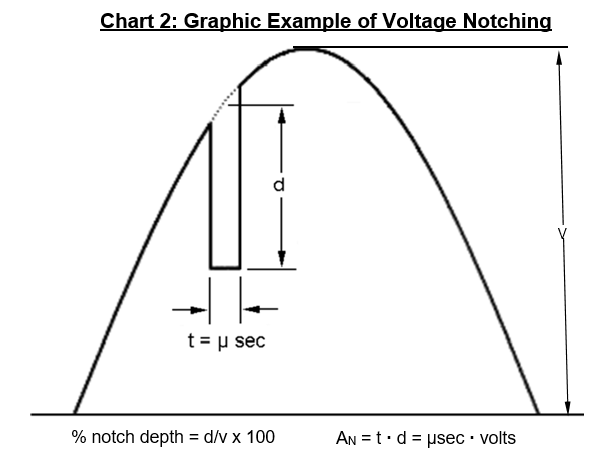
Table 1: Low voltage system classification & distortion limits due to voltage notching
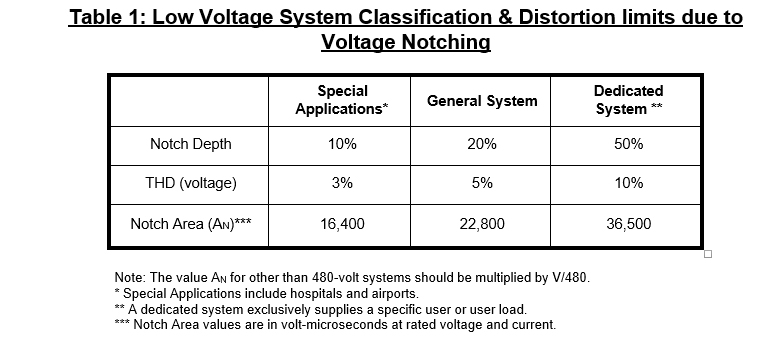
Table 2: Maximum Allowable Voltage Harmonic Distortion
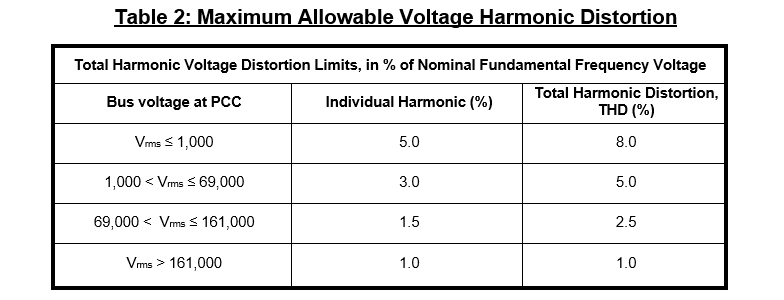
Table 3: Current distortion limits – general distribution systems, from 120 v through 69 kv
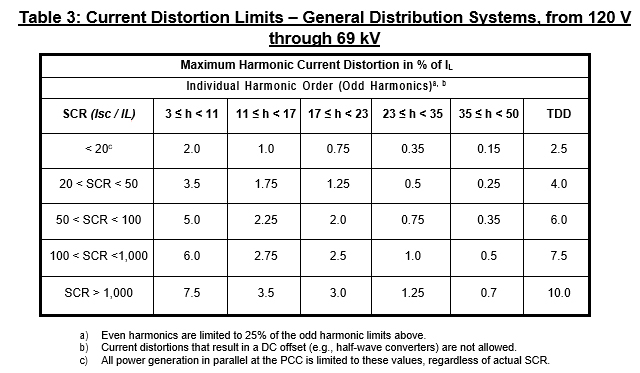
Table 4: Current Distortion Limits for Sub-Transmission Systems, from 69 kV through 161 kV
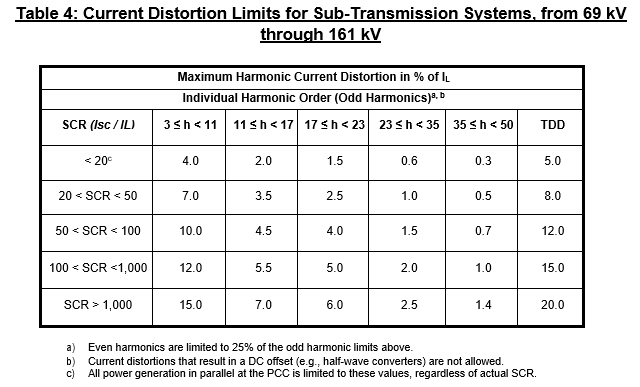
Table 5: Current distortion limits for general transmission systems (> 161 kv), dispersed generation and co-generation
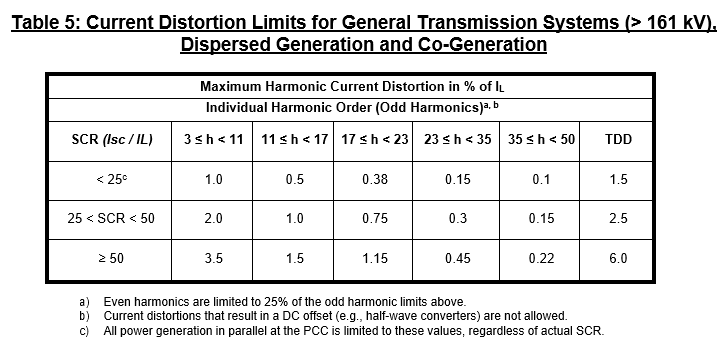
Click here for a printer-friendly version.

Need Assistance?
Contact Customer Care. We’re here to help.